

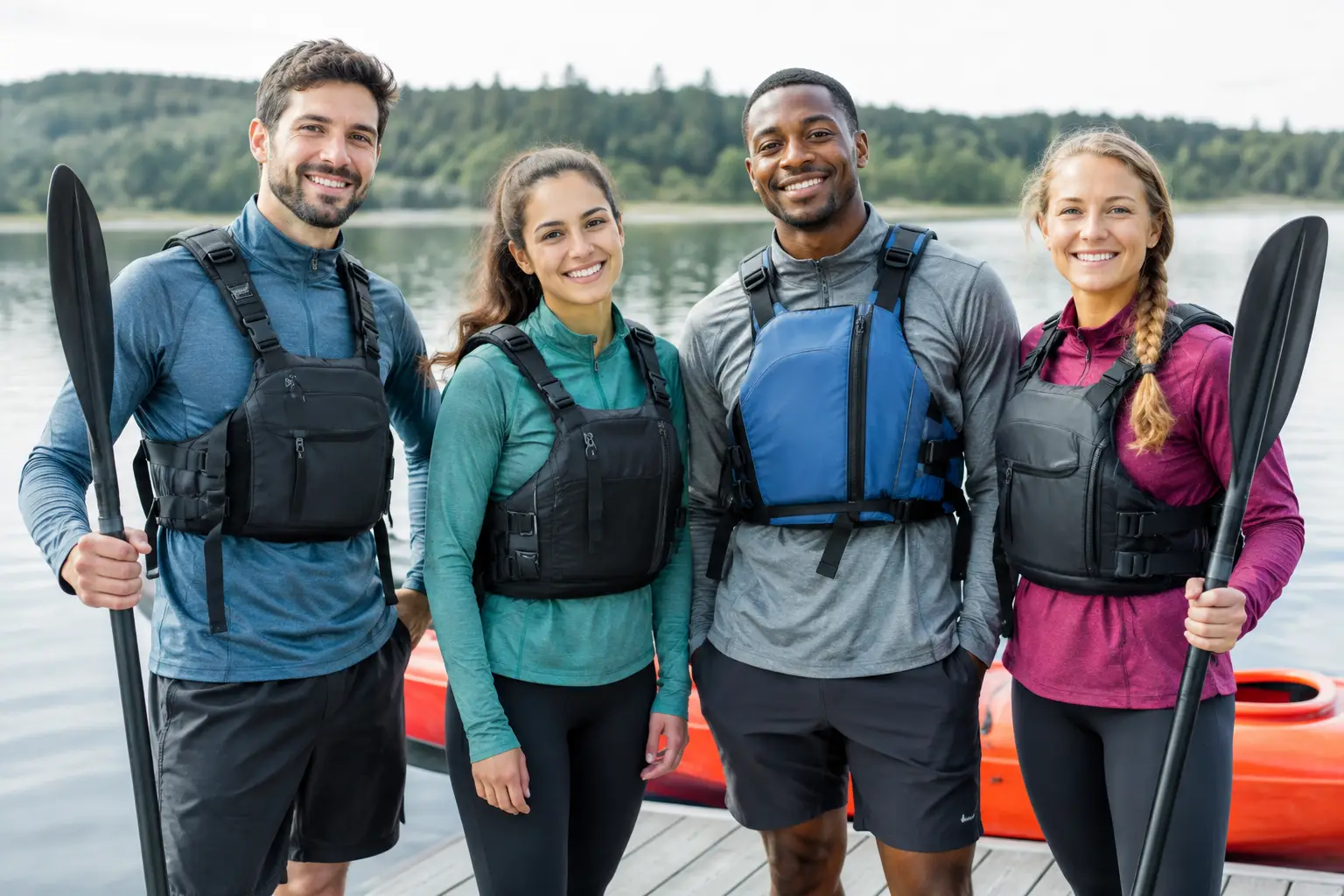
The kit decision often becomes urgent when the race calendar is already filling up. A new crew has joined, last season’s shirts no longer match, or the committee needs every paddler looking like one team on the start line. Good paddling apparel solves more than a wardrobe problem. It needs to keep athletes comfortable through hard sessions, present a clear club identity and arrive in time for the events that matter.
For dragon boat teams and paddling clubs, the best approach is to build a considered kit range rather than trying to make one garment cover every use. A race rashie, a warm-up layer and a social shirt each have different jobs. When they work together visually, the result is kit that members are pleased to wear on and off the water.
Start with the conditions your team actually paddles in
A British club may train through chilly spring mornings, humid summer regattas and wet autumn evenings. International crews can face a different challenge again: intense sun, heat and long periods between races. That is why fabric choice should begin with where, when and how often the garment will be worn.
For racing and regular water sessions, lightweight technical fabrics are usually the right foundation. They should move moisture away from the body, dry quickly and allow a full paddle stroke without pulling across the shoulders. A close but non-restrictive fit helps keep fabric from catching wind or feeling heavy when wet. For crews spending long hours outdoors, sun coverage matters too, particularly in long-sleeve rashies and leggings.
Warm-up kit needs a different balance. A windbreaker is useful on an exposed pontoon or at the marshalling area because it blocks the chill without becoming bulky. Hoodies provide warmth before early starts, during travel and after paddling, but they are not a substitute for a technical race top. Ask paddlers to wear a heavy cotton hoodie during a hard session and it will hold moisture rather than manage it.
Board shorts, padded shorts and leggings should be selected around the boat and the individual athlete. Some paddlers prefer the freedom of board shorts, while others value the coverage and secure feel of leggings. Padded shorts can make repeated training sessions more comfortable, especially for crews spending extended time seated. There is no universal answer – the right choice depends on discipline, climate and what your members will genuinely wear.
Paddling apparel needs freedom where the stroke demands it
A paddle stroke asks a lot of the upper body. Rotation, reach and a strong catch all expose poor patterning quickly. If a top rides up at the waist, pinches under the arms or restricts the shoulders, it becomes a distraction before the first race is finished.
This is why garment shape matters as much as fabric. Racerback rashies are popular with athletes who want minimal material around the shoulder blades. Short-sleeve styles provide a familiar team-shirt profile with lighter coverage, while long sleeves suit cooler conditions and crews seeking greater sun protection. Offering more than one approved cut can make a club kit more inclusive without weakening the team look.
Do not treat sizing as a last-minute admin task. Share a clear size chart early, encourage members to measure rather than guess and set an internal deadline for confirmations. A squad order can include a wide range of body shapes, and fit preferences vary even among paddlers who take the same labelled size. Getting this stage right reduces exchanges, uncertainty and the awkward race-week discovery that someone’s race top is too tight to paddle in.
Race kit should be recognisable at a glance
On crowded race sites, a team’s colours and design are practical as well as memorable. They help athletes find their crew, give supporters something to spot from the bank and make photographs feel unmistakably yours. Strong design does not mean putting every idea onto one jersey. It means using colour, contrast and a clear hierarchy so that the club name, logo and key details remain legible from a distance.
Consider how the design will look across the range. A bold chest treatment can carry from a rashie to a hoodie, windbreaker and social shirt. Side panels, sleeve details and repeating patterns can add energy without making the garment look busy. If sponsors are involved, allow appropriate space for their marks while protecting the club identity that members represent year after year.
Sublimation printing is particularly useful for detailed, all-over team designs because colour and graphics become part of the fabric rather than sitting heavily on top of it. This supports vivid custom artwork and avoids the cracking associated with some surface-applied prints. Embroidery can work well for selected off-water pieces and accessories, where a textured, professional finish suits the garment.
Build a kit range, not a one-off order
The most workable club ranges are organised around real moments in the season. Race-day kit gives the crew a consistent competitive identity. Training apparel provides options for hot, wet and cooler sessions. Off-water pieces make travel, volunteering, prize-giving and social events feel equally connected.
A practical starting range might include a race rashie in the preferred sleeve options, board shorts or leggings, a windbreaker, a hoodie and a social shirt. Teams do not need to launch every item at once. Smaller clubs may begin with the race top and add layers as membership and budget allow. Larger organisations may need separate designs or colourways for senior, youth, mixed and festival crews, while maintaining an identifiable family look.
The trade-off is choice versus simplicity. Too few options can leave members without suitable kit for changing conditions. Too many choices make ordering harder to manage and can dilute a clean team identity. Set a core compulsory race kit, then choose a limited number of optional training and social pieces. This gives the committee control while allowing paddlers to buy according to need.
Plan backwards from the first event
Reliable delivery starts with a realistic internal timetable. Begin with the event date, then work backwards through design approval, size collection, order confirmation and production. Leave contingency for committee discussions, late joiners and courier delays, particularly around major regattas and holiday periods.
A finished approved design may have a production lead time of around 30 days, but a new concept needs additional time for design development and revisions. That time is valuable. It is far easier to correct a logo position, spelling or colour choice on a digital proof than after garments have entered production.
Nominate one or two people to consolidate feedback. A design-by-committee process can stall when every member sends separate instructions. Gather opinions, agree the essentials and provide one clear set of revisions. Before approving the final artwork, check team names, sponsor details, colour references, garment styles and quantities carefully. A strike-off confirmation provides an important opportunity to verify the finished direction before the full run proceeds.
Make ordering easier for members and organisers
A well-run apparel order should not fall entirely on one exhausted captain. Give members a concise order guide that explains the approved items, prices, size process and payment deadline. Be clear about which garments are required for racing and which are optional. If a club expects members to source items independently from an approved online collection, say so early enough for everyone to prepare.
For bulk orders, collect names, sizes and quantities in a single controlled format. Check totals against your crew requirements before placing the order. It is also sensible to think ahead about new recruits. Ordering a small number of additional race tops can be useful for a growing club, although this needs balancing against budget and design changes planned for the next season.
Quality assurance matters most when deadlines are tight. Teams need confidence that colours, artwork, garment selection and finishing will match what was approved. A specialist supplier that understands paddling can also help identify practical issues before they become expensive ones, whether that is choosing a more suitable garment, preparing artwork for print or keeping an order moving towards a race date.
bluesupply.asia works with teams across custom rashies, shorts, layers and off-water garments, with the design and production process structured around the realities of club ordering. The aim is straightforward: help your crew look prepared, feel comfortable and arrive at the start line as one unit.
Your next kit order is a chance to make training mornings, travel days and race photographs feel more connected. Start early, choose garments for the conditions your paddlers face, and give the final design the attention it deserves. When the crew pulls on the same colours before the call to marshal, the kit has already done part of its job.