

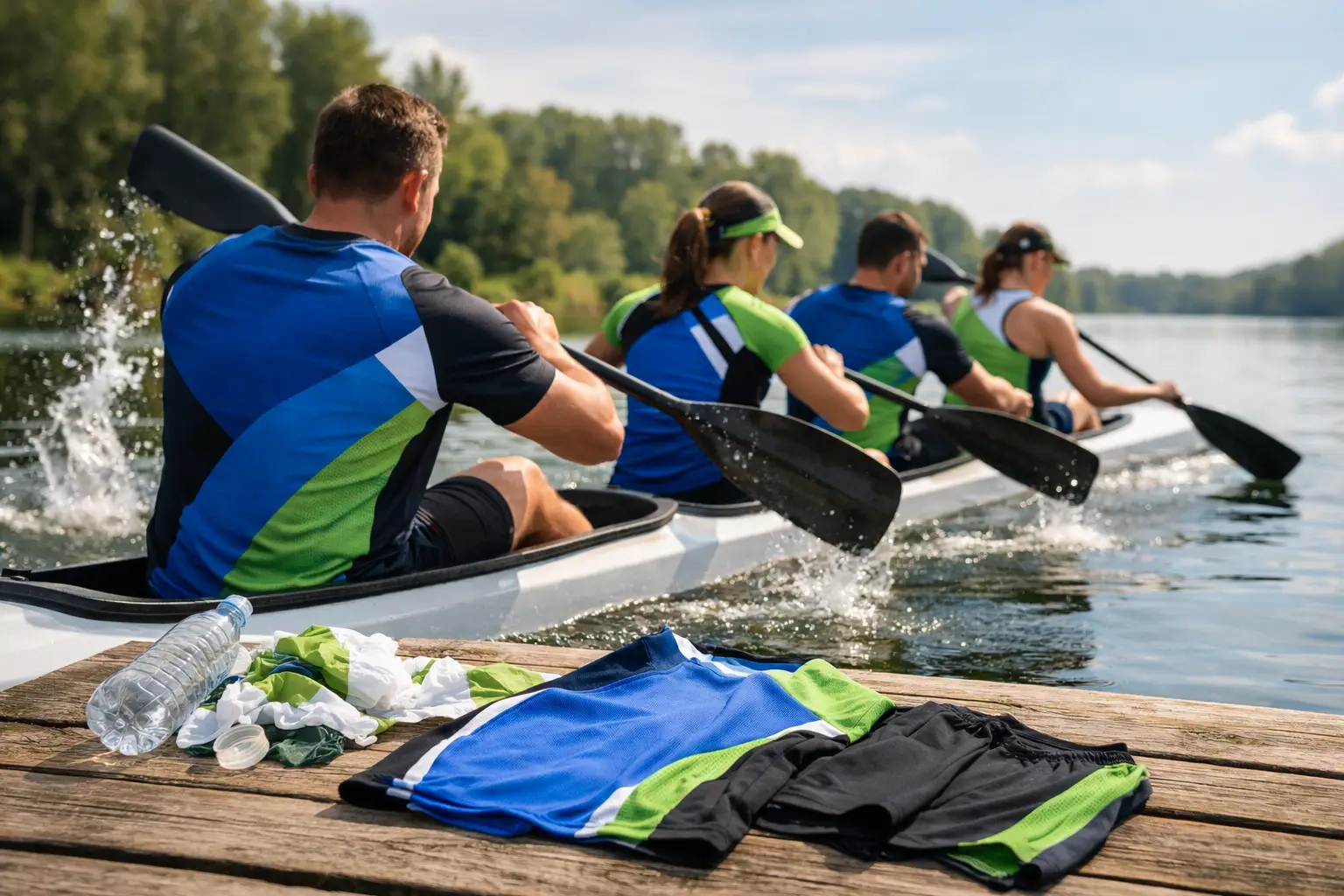
A race crew can spot a poorly planned kit order before the first paddle hits the water. Colours vary between garments, late additions cannot match the squad, and a well-meant sustainability claim turns out to be little more than a label. Recycled fabric sports teamwear is a worthwhile option for paddling clubs, but only when it is selected with the same care as fit, visibility, team branding and race-day delivery.
For dragon boat teams and paddling clubs, the best outcome is not simply a recycled garment. It is team kit that works through winter training, summer regattas, travel days and post-race socials – and that remains part of the club wardrobe long enough to justify the order.
What recycled fabric sports teamwear means in practice
Most recycled performance teamwear is made with recycled polyester, often produced from post-consumer plastic bottles or recovered textile waste. It can offer the light weight, quick-drying feel and print quality that paddlers expect from rashies, jerseys, leggings and shorts. For teams used to synthetic technical fabrics, this makes recycled options a practical starting point rather than a radical change in what they wear.
However, recycled content is not a guarantee that every part of a garment has a lower impact. Zips, elastic, thread, labels, coatings and packaging may be made from different materials. Fabric mills, dye processes, transport, garment lifespan and end-of-life options all matter too. A responsible club should avoid broad claims such as “fully sustainable” unless the supplier can clearly support them.
That does not make recycled fabrics a poor choice. It means the strongest message is an honest one: the team has chosen a garment containing recycled material, specified it for regular use and designed it to stay in service. For a club committee, that is both more credible and easier to explain to members and sponsors.
Start with how your crew actually paddles
A recycled fabric option still needs to earn its place in the kit bag. A warm-water dragon boat crew racing short, intense heats may favour a lightweight racerback or short-sleeve rashie. A sea paddling group training in changeable British conditions may need long sleeves, a windbreaker layer and leggings that remain comfortable on the water. The right fabric is the one that suits the discipline, climate and crew preference.
Prioritise comfort before the claim
Ask how the fabric handles sweat, spray and repeated washing. Does it dry quickly between races? Does it feel smooth under a buoyancy aid? Is there enough stretch through the shoulders for a full paddling stroke? These questions apply whether the material is virgin polyester, recycled polyester or a blend.
Weight also matters. A very light race top can be excellent in humid conditions but less useful for early-morning training or a cool, windy regatta. Conversely, a heavier garment may last well but feel too warm for crews racing in the sun. If your club has several disciplines or seasonal training groups, one recycled fabric garment may not suit every use.
Fit deserves the same attention. Size ranges should cover the whole squad, and sample sizing should be checked before a bulk order. A team shirt that looks sharp in the artwork approval stage but restricts movement on the catch will not become a favourite piece of kit.
Specifying recycled fabric sports teamwear properly
Good procurement begins with clear questions. Rather than asking only whether a garment is “eco-friendly”, ask for the fabric composition, recycled-content percentage and the source of that recycled content where available. It is also sensible to ask whether the stated material applies to the main body fabric only or the complete garment.
For a custom order, confirm the fabric weight, stretch, construction and care requirements. Request details of any recognised material certification where relevant, but treat certificates as one part of the decision rather than the whole story. The most useful supplier is one that can explain exactly what the product is made from without vague environmental language.
A strike-off is particularly valuable when choosing a new fabric. It allows your club to inspect the colour, logo detail, fabric feel and finish before the full production run. Deep blues, bright reds and fine white lettering can look different on screen from how they appear on a textured technical fabric. Checking the physical result protects the club budget and avoids race-week disappointment.
There is also a cost trade-off. Recycled technical fabrics can carry a different price point from standard alternatives, particularly for specialist cuts or lower-volume runs. Committees should compare like for like: fabric specification, print method, fit, quality control, delivery timing and expected lifespan. The cheapest shirt is rarely the best value if it fades, fits poorly or needs replacing after one season.
Design for more than one race weekend
The lower-impact choice is often the garment that remains wanted and wearable. A club kit design should feel recognisable without being tied too closely to one event year or a short-lived sponsor campaign. Keep the core team colours, club name and major logos consistent, then use small updates when a particular race, anniversary or sponsor requires them.
Sublimation printing is well suited to teamwear because the design becomes part of the fabric rather than sitting as a heavy surface layer. It gives clubs scope for bold boat graphics, paddle motifs, lane-inspired detailing and individual names without compromising the clean team look. Yet a complex design should still work from the bank, in team photographs and across different garment cuts.
Give logos enough clear space and check how they sit on each size. A chest logo that is centred on a medium garment can shift awkwardly on a racerback or a larger size. Numbers, names and crew roles should be readable, but they do not need to compete with every other element of the artwork. The best paddling kit looks like a united crew at distance and rewards a closer look.
Plan the order around your racing calendar
Sustainability is weakened when a rushed order results in wrong sizes, unused extras or an emergency replacement run. Start by working backwards from the first event where the squad needs the kit. Include time for member sizing, artwork approval, design development where needed, strike-off confirmation, production and delivery.
Once a finished design is approved, a lead time of around 30 days gives teams a useful planning benchmark. A new design process, multiple rounds of feedback or late sponsor changes can add time. Build in a buffer for committee decisions and make one person responsible for consolidating feedback. Ten separate opinions sent at different times are a fast route to delays.
A practical order form should collect each member’s name, garment style, size and personalisation requirements in one place. It should also separate race kit from optional social wear. That distinction prevents people ordering a warm hoodie when the captain is trying to confirm competition rashies, and it keeps the production brief clean.
For large squads, consider a modest allowance for future joiners only if the design and garment are likely to remain current. Overstocking speculative sizes can create waste. A better approach is often to retain approved artwork and ordering details so that a top-up can be matched later, subject to fabric availability and production requirements.
Care keeps kit in circulation
A recycled fabric rashie does not need complicated treatment, but it benefits from good habits. Rinse salt, river water and sunscreen out soon after use. Wash inside out at a lower temperature with similar colours, avoid harsh bleach and skip fabric conditioner where garment guidance advises against it. Air drying is kinder to technical fibres and printed finishes than repeated high heat.
Encourage members to label or name their kit, especially at multi-club regattas where identical bags and changing areas are part of the race-day routine. A top that makes it home after every event is more useful than one that needs replacing because it was left in a tent or mixed into another crew’s pile.
When your committee is ready to consider recycled fabric sports teamwear, begin with a clear brief: how the crew paddles, which garments are essential, what the fabric specification needs to prove and when the kit must arrive. That gives your team the best chance of choosing apparel that carries its colours proudly for many seasons to come.