

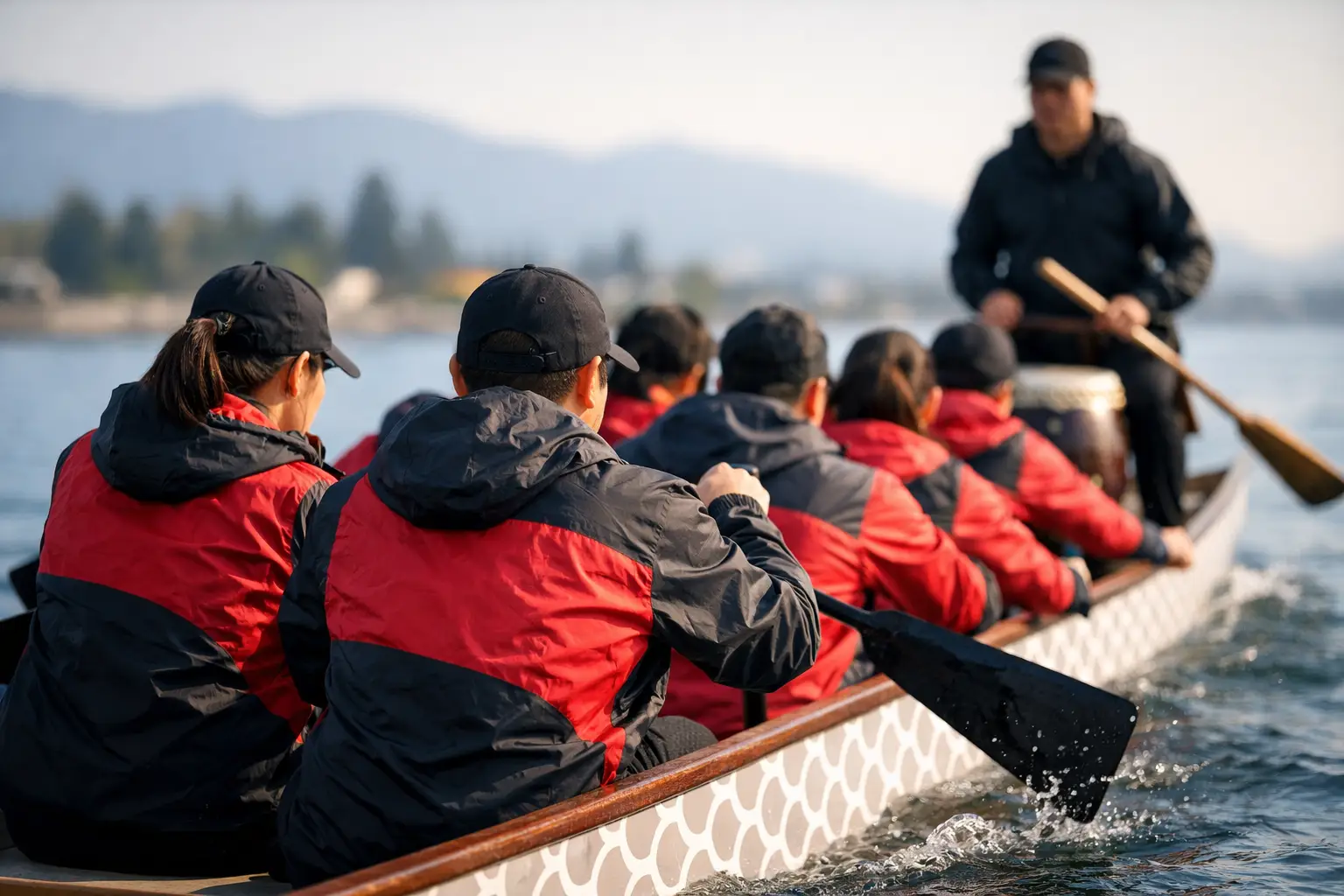
A cold start at the boat park can change the mood of an entire crew. Paddlers are carrying boats, checking seats and waiting for a race call in wind, spray or light rain – often before they have generated any real warmth. The right windbreakers for dragon boat teams give your squad a practical outer layer for those moments, while making the whole club look prepared, connected and recognisable.
A windbreaker is not intended to replace a heavy winter coat, nor should it feel like a sail when the wind picks up. For dragon boat crews, it needs to earn its place in the kit bag: easy to wear over race kit, comfortable during active warm-ups, useful on the water’s edge and smart enough for travel, presentations and post-race photos.
Why a Team Windbreaker Matters
Dragon boating is rarely just a one-hour race. Teams arrive early, rig equipment, warm up, wait between heats and support other crews. Conditions can move quickly from still and warm to exposed and chilly, particularly on open water or at regattas early and late in the season. A lightweight windbreaker gives paddlers an immediate layer without the bulk of a fleece or insulated jacket.
It also solves a familiar club problem: a mix of random coats in every colour in the car park. A coordinated outer layer creates a stronger arrival, whether your team is travelling to a local festival, representing the club at a championship or gathering sponsors for a group photograph. It signals that the crew takes pride in its identity before a paddle enters the water.
For committee members, that role makes windbreakers a useful addition to a wider apparel plan. Race jerseys and rashies may be the performance essentials, but outerwear is often the piece members reach for most across the year.
What to Look for in Windbreakers for Dragon Boat Teams
The best choice depends on when and how your crew will use it. Start with weather protection, but do not stop there. A garment that looks excellent in a design proof but is noisy, restrictive or awkward over a buoyancy aid will spend more time in cupboards than at training.
Wind Resistance Without Stuffy Wear
A windbreaker should reduce the bite of wind while remaining light enough for moving around the venue. This balance matters during land warm-ups, loading boats and cool-downs. If your team intends to paddle in the garment, prioritise freedom through the shoulders and back, along with a cut that does not bunch around the waist when seated.
Water resistance can be useful for spray and short showers, but it is worth being realistic about the conditions. A windbreaker is a light shell, not a fully waterproof sailing jacket. For teams racing through persistent rain or spending long periods officiating on the bank, a dedicated waterproof may still be the better option.
Breathability is the trade-off. Greater protection from wind and moisture can sometimes mean less airflow. For most dragon boat teams, a lightweight, easy-to-layer garment is the more versatile choice because it works across training, travel and race-day waiting periods.
A Fit That Works Across the Whole Crew
Ordering for a dragon boat team means fitting a wide range of body shapes and preferences. A good size range is essential, but so is understanding the garment’s intended use. Some paddlers will want a close fit for warm-up and active wear; others will want enough room to layer a hoodie underneath on colder mornings.
Ask members to measure against the supplied size chart rather than selecting the size they usually buy elsewhere. Different garment cuts can vary significantly. It is also sensible to establish whether the team wants a unisex fit, separate men’s and women’s options, or a combination. A clear sizing deadline prevents the purchasing lead from chasing last-minute changes just as artwork is ready for approval.
If possible, agree the layering expectation before the order opens. “Designed to fit over a race jersey” is a much clearer instruction than “order your usual size”.
Details That Make Race Days Easier
Small construction details have an outsized effect at a wet, busy venue. A full zip allows paddlers to put the jacket on or take it off quickly without disturbing hair, caps or race kit. A higher collar offers welcome protection while standing at the dock or travelling in an open vehicle. Secure pockets are useful for phone, keys and accreditation, although teams should avoid carrying valuables onto the water.
An adjustable hem can help reduce flapping in exposed conditions. Elasticated cuffs are simple and practical, particularly when crews are moving equipment. Consider visibility too. A team colourway may be the priority, but contrast panels or considered print placement can make people easier to identify around a crowded event site.
Build a Design That Looks Like Your Crew
Windbreakers offer a larger canvas than a race vest, but that does not mean every area should be filled. The most effective designs usually place the club identity where it can be read at a glance: a strong logo on the chest, a clear team name across the back and colours that connect with existing jerseys, shorts and social kit.
Keep in mind how the garment will look when zipped, unzipped and worn over another layer. Fine details placed across a zip can be harder to read. Very small text may disappear at distance, especially on darker colours. Large, confident graphics generally work better for a crew arriving together at a race venue.
This is also the time to decide how sponsors fit into the garment. If sponsor branding is part of the plan, give it a defined position rather than treating remaining space as an afterthought. A balanced layout protects both the club identity and the sponsor’s visibility.
At bluesupply.asia, the approval process is built around confirming the finished design before production. Take that stage seriously. Check spelling, logo versions, colours, placement and any individual names or crew designations. A final proof is where a team can catch the small details that become very noticeable once 20 or 40 jackets arrive.
Plan Your Order Around the Race Calendar
The fastest way to create pressure is to start ordering outerwear once the event is already close. Custom team kit involves design approval, size collection, production and delivery, so work backwards from the first date your crew needs the jackets – not the date of the main championship.
For a finished approved design, allow around 30 days for standard production and delivery planning. A new design concept, revised branding or multiple rounds of artwork development will add time. Building in a sensible buffer is especially valuable before major regattas, when committee members are also organising entries, transport, safety equipment and crew lists.
One nominated order lead keeps the process cleaner. They can circulate artwork, gather sizes, confirm quantities and set a firm cut-off for payment or member responses. It is usually better to order a small number of spare garments in common sizes than to reopen a custom run immediately after the first delivery.
Make Windbreakers Part of a Wider Kit Plan
A windbreaker works best when it has a clear place in the club wardrobe. Pair it visually with race rashies, board shorts, leggings, hoodies and social shirts so members can build layers that still look like one team. This is particularly helpful for newer paddlers, who may not yet know what to wear for changing conditions at training and events.
Not every member needs every item. Competitive crews may prioritise race kit and a windbreaker, while supporters, volunteers and social members may value the outer layer as their main club garment. Offering a coordinated range gives people choice without weakening the team look.
Care That Keeps Team Colours Looking Sharp
A lightweight jacket will last longer when members treat it as technical outerwear rather than a general laundry item. Follow the garment care label, close zips before washing and avoid high heat, which can affect printed decoration and fabric performance. Hanging the jacket to dry is usually kinder than leaving it crumpled in a kit bag after a wet session.
Encourage paddlers to rinse off mud or saltwater residue after coastal events and to air garments promptly. This is not glamorous advice, but it helps keep jackets presentable for the next race weekend and protects the investment the club has made.
A well-chosen windbreaker gives your team more than protection from a chilly bank or gusty start line. It gives every paddler a dependable layer they can pull on with pride – so set your design, collect sizes early and have the crew ready before the next call to marshalling.