

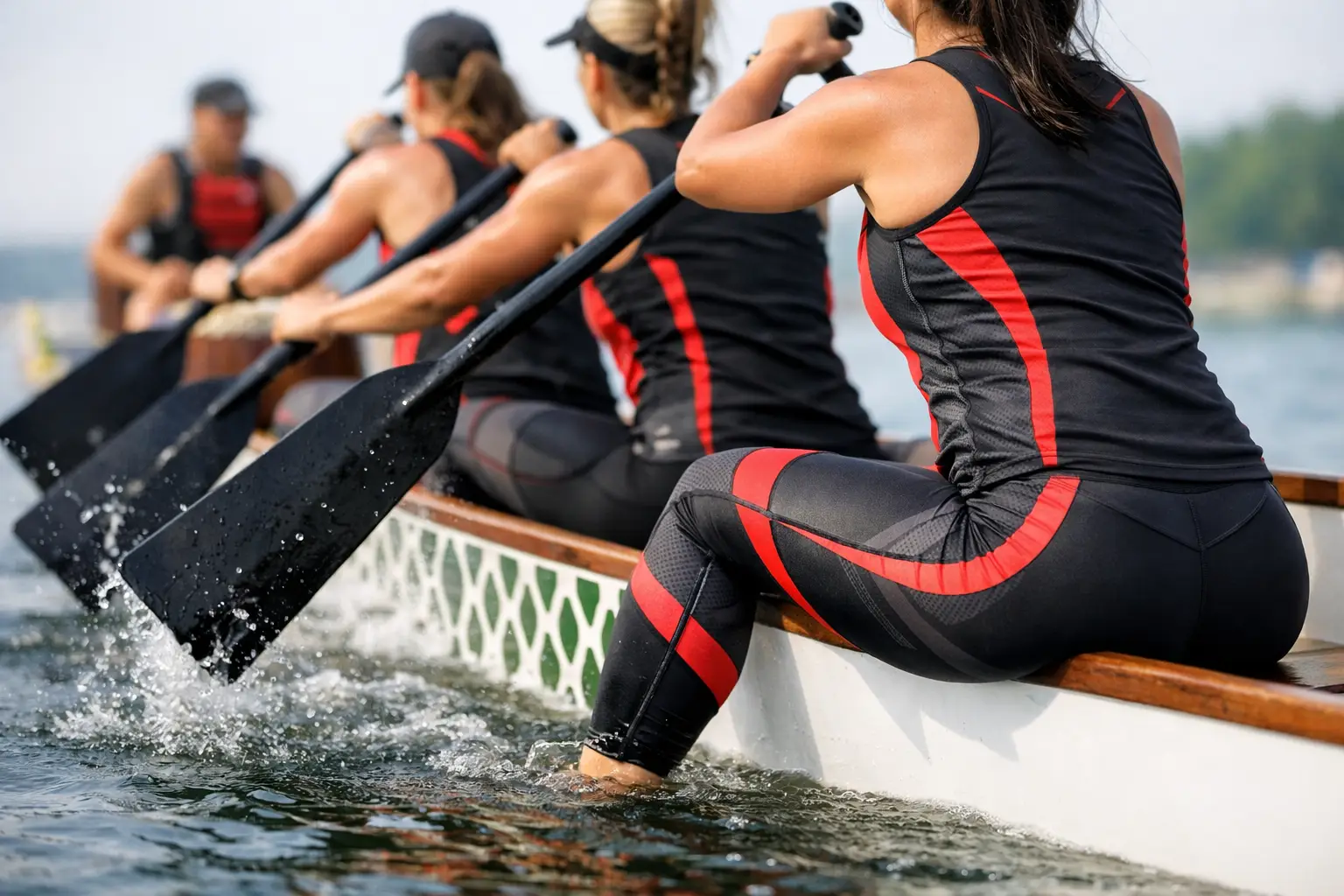
A cold early-session pontoon, a wet gunwale and repeated rotation through the boat soon expose clothing that is only made to look the part. Dragon boat team leggings need to support long training blocks, keep their shape when damp and carry club colours with the same confidence on race day as they do in squad photos.
For teams, leggings are not simply an off-the-shelf gym layer with a logo added. They are a practical part of a coordinated kit plan, particularly for paddlers training through the British winter, travelling to regattas or wanting reliable coverage beneath a rashie or team hoodie. The right pair helps every paddler feel prepared, comfortable and visibly part of the crew.
What Dragon Boat Team Leggings Need to Do
Dragon boating asks a lot from lower-body kit. Paddlers are seated, braced, rotating and often moving between land, dock and boat in quick succession. Leggings should feel close enough to avoid catching or bunching, but never so restrictive that they distract from hip rotation or a strong catch.
A well-chosen technical fabric provides stretch in every working direction, with enough recovery to return to shape after training. This matters when a garment is worn repeatedly across a season. Leggings that loosen at the knees or sag at the waist can become an irritation long before the finish line.
Coverage is another real consideration. Some crews use leggings as a dependable layer for cooler mornings, sun exposure or mixed weather. Others wear them for travel, warm-ups and social events around a regatta. In each case, an opaque fabric and secure waistband give paddlers confidence when they are stepping into the boat, sitting low in the hull or helping load equipment.
The exact balance depends on your club. A summer racing team in Hong Kong may prioritise lightweight, quick-drying material, while a British club training through spring and autumn may value a slightly more substantial feel. The answer is not one universal weight of fabric. It is choosing a garment specification that reflects when and how your team actually paddles.
Fit Matters More Than a Generic Size Label
A cohesive squad look should not mean forcing every paddler into the same fit. Teams include different heights, builds and personal preferences, and an effective order process accounts for that from the start. Clear size charts and a proper collection of individual size choices reduce the risk of last-minute swaps and unworn kit.
Look first at the waistband. A high, stable waistband can be particularly useful for a seated sport, as it is less likely to roll during repeated torso rotation. The rise should feel secure without digging in when a paddler is sitting on the bench for a full session.
Leg length also deserves attention. Full-length leggings offer dependable coverage for cooler conditions and travel days. Cropped options can work well in warm weather, but teams should consider whether everyone will use them in the same way. If your aim is a single all-season team garment, full length is often the more flexible choice.
Where possible, have a representative sample group check sizing before the whole squad commits. A captain, coach or kit lead can gather feedback from paddlers with different body shapes and seat positions. That small step is much easier than managing fit concerns once names and race dates are already confirmed.
Think about the boat, not just the changing room
A pair of leggings can feel excellent while standing, then reveal weaknesses in the boat. Test movement in a low seated position. Can the wearer lift a knee, brace a foot and rotate without fabric pulling at the waistband or becoming sheer across the seat? These are the details that make a team garment genuinely useful rather than merely presentable.
Designing Leggings That Look Like Team Kit
Leggings offer more design space than many clubs first expect. Because the garment is seen in motion, strong colour blocking, clear side panels and considered placement of club marks can create a recognisable look from the dock, on the water and in event photography.
The best designs usually start with the wider collection. If your team already has a race rashie, hoodie, board shorts or jersey, leggings should feel connected rather than competing for attention. Repeat key club colours, use the same logo treatment and carry through a graphic element from the upper body where it makes visual sense.
Sublimation printing is particularly useful for team leggings because colour and pattern are incorporated into the fabric rather than applied as a heavy surface layer. It opens up detailed artwork, gradients and all-over graphics while keeping the garment suitable for active use. It also avoids the cracked or lifted appearance that can occur when a basic print method is pushed too far on a stretch garment.
That said, more artwork is not always better. Fine logos placed across heavily stretched areas can lose definition, and very busy patterns may make sponsor marks or club names harder to read. A reliable approach is to use bolder artwork on the side leg or lower leg, then keep key identifiers clean and intentional.
Build a design that works across the whole squad
Teams should decide early whether leggings are a core race-day item or an optional training layer. If they are compulsory for a particular event look, the design needs broad appeal and straightforward sizing. If they are optional, a more expressive graphic can work, provided it still belongs clearly to the club collection.
It is also sensible to think ahead. A design that can be reordered for new recruits, replacement garments and future seasons gives your club continuity. Keeping approved artwork and colours consistent makes it simpler to add pieces without recreating the visual identity every time the squad changes.
Planning a Club Order Without Last-Minute Pressure
The strongest kit orders begin before the race calendar starts to feel urgent. Work backwards from your first major event, allowing time for design development where needed, sizing collection, strike-off confirmation, production and delivery. Finished designs can move through production quickly, but a new concept naturally needs extra discussion and approval.
Give one person responsibility for the master order, even if several committee members are involved. They can collect names, sizes, garment choices and payment status in one place, then check the final quantities against the supplier’s order sheet. This avoids duplicated requests and the familiar problem of discovering three different versions of the club logo in circulation.
Before production, review artwork carefully. Check spelling, sponsor requirements, logo position, colour references and any paddler names or numbers. A strike-off or confirmed proof is the point to catch issues. Once garments are in production, changes are rarely simple, particularly on a custom run.
For a typical team order, it helps to agree four practical points before requesting a quote:
- the intended use, such as winter training, race kit or travel wear
- the full size range and estimated quantity, including likely late joiners
- the design direction and any existing club artwork
- the date by which the kit must be in paddlers’ hands
These details allow a supplier to advise on garment options and production timing with much greater certainty. They also help a committee compare like with like rather than choosing solely on unit price.
Care That Keeps Colours and Compression Looking Right
Team leggings earn their keep in wet conditions, so a little care protects the investment. Rinse or wash them promptly after muddy sessions, saltwater exposure or heavy use. Turn garments inside out, use a cool wash and avoid harsh bleach or fabric softener, which can affect technical fibres over time.
Air drying is generally the safer choice. High heat can shorten the life of elastic fibres and may affect the fit that made the leggings comfortable in the first place. If your crew is travelling, do not leave damp kit sealed in a bag for days between races. A quick rinse and chance to dry can make a noticeable difference.
A Better Layer for a More Prepared Crew
The right dragon boat leggings bring together movement, coverage and club identity without asking paddlers to compromise on comfort. They should support the work of training, look credible beside the rest of the team range and arrive with enough time for everyone to wear them in before race day.
For clubs preparing a new season, bluesupply.asia can help turn approved colours and artwork into a coordinated leggings design that belongs with the rest of the squad kit. Start the sizing and design conversation early, and your crew can step onto the dock looking ready long before the starter calls them to the line.