

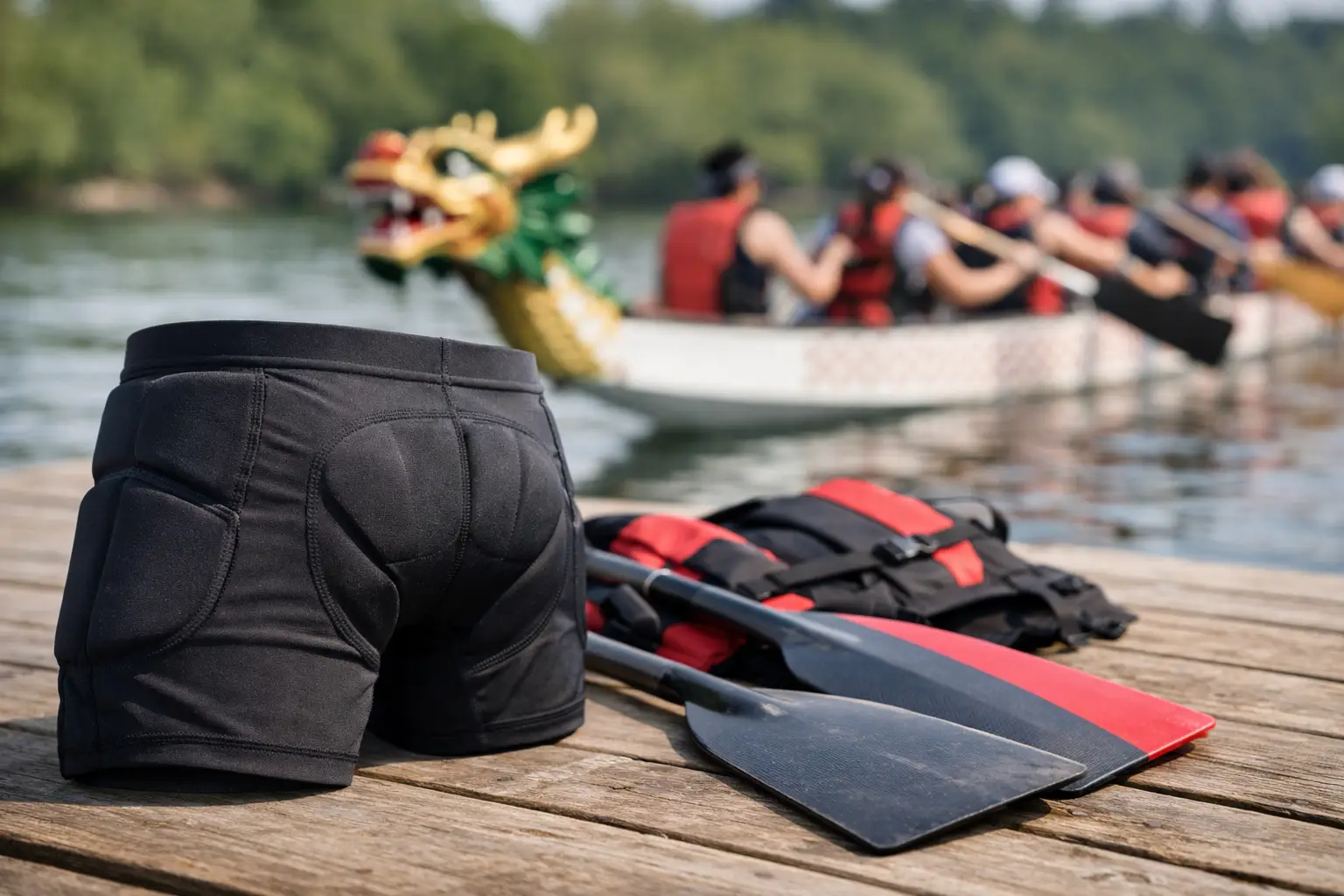
A hard boat seat can become the loudest distraction in a session. When your stroke rate rises, your legs are driving and the crew is working to hold timing, discomfort around the sit bones is not something to simply put up with. The right padded shorts for dragon boating help paddlers stay settled, move freely and concentrate on the work in front of them.
They are not just a comfort extra for long-distance crews. Well-chosen padded shorts can make regular training more manageable, particularly during repeated starts, longer water sessions and back-to-back race heats. For teams ordering kit, they are also a practical addition to a coordinated paddling wardrobe – one that needs to fit consistently across the crew and look right alongside race rashies, board shorts and off-water layers.
Why dragon boat paddlers need purpose-built padding
Dragon boating places pressure on the body differently from cycling, running or gym training. You are seated on a narrow, firm bench, often rotating through the hips while reaching forward, loading the blade and driving back through the stroke. The contact point is constant, but your position is not. That makes the cut, thickness and stability of the pad matter as much as the presence of padding itself.
A pair of ordinary gym shorts may feel fine before launch, then bunch at the waist or ride up once you are repeatedly rotating. Cycling shorts are not always the answer either. Their chamois is designed around a saddle and a forward-leaning riding position. In a dragon boat, an oversized or heavily shaped chamois can feel bulky, retain water and interfere with how you sit on the seat.
Dragon boat padding should reduce pressure without making the paddler feel perched above the bench. The best result is a low-profile layer that stays in place, dries quickly and allows a full range of movement through the catch and exit.
What to look for in padded shorts for dragon boating
Fit comes first. Padded shorts should feel close and secure, not restrictive. If fabric can move independently from your body, it is more likely to rub during a long paddle. At the same time, excessive compression can make movement uncomfortable and may discourage paddlers from wearing them for longer training blocks.
Look for a waistband that stays comfortable when seated and when leaning forward. A high, soft waistband often suits paddlers who dislike pressure across the stomach, while a lower profile can work well for those who prefer a more traditional board-short feel. There is no single best option for every crew, which is why clear size charts and fit samples are valuable before a full team order.
The padding itself should be firm enough to take the edge off a hard seat, but flexible enough to follow the body. Very thick foam may seem attractive for marathon paddling, yet it can trap heat, hold moisture and feel cumbersome in short, high-intensity racing. For most mixed-use club paddling, moderate-density padding is the practical choice.
Fabric is equally important. A technical stretch fabric helps the shorts move with the paddler through rotation and leg drive. Quick-drying performance is useful after rain, wash-downs and sweaty summer sessions, while a durable outer finish stands up better to repeated contact with textured seats. Flat or carefully positioned seams help reduce chafing in an area where friction quickly becomes noticeable.
Match the shorts to how your team paddles
The right specification depends on the work your crew does most often. A team focused on short regatta races may favour lighter, less bulky shorts that feel fast and unobtrusive. A crew training for long-distance events, festivals or multi-race weekends may place more value on supportive padding and all-day comfort.
Cold-weather training introduces another consideration. Padded shorts can be worn under leggings or water-resistant training bottoms, giving paddlers seat protection without sacrificing warmth. In warmer weather, they can be worn on their own or under lightweight board shorts, depending on the club’s preferred look and the level of coverage individual paddlers want.
For steering positions and coaches who spend extended periods seated, padding can be particularly worthwhile. That said, each paddler has different pressure points, mobility needs and preferences. Encourage experienced crew members to test the garment during a proper water session rather than judging it from a few minutes in the clubhouse.
Getting the fit right across a crew
For a committee or kit manager, the challenge is not choosing one pair of shorts. It is choosing a garment that works across a squad with different body shapes, experience levels and expectations. A good ordering process reduces uncertainty before production begins.
Start by sharing the size chart early and asking paddlers to measure themselves rather than guessing from their usual casual-clothing size. Technical garments are intended to fit differently from everyday shorts. If the team is between sizes, consider whether the paddler prioritises a tighter race fit or more room for layered training use.
It also helps to agree how the shorts will be worn. If most of the crew plans to wear them beneath board shorts, the outer layer needs enough room to avoid pulling or bunching. If padded shorts will be used as a visible part of team kit, the design, panel placement and logo positioning should be considered alongside the rest of the race range.
A strike-off or approved sample process gives organisers confidence that colours, artwork and construction meet expectations before the full run is made. This matters when team kit represents sponsors, anniversary designs or a club identity that paddlers have worked hard to build.
Team design should support performance
Padded shorts may be a technical item, but they still belong to the team look. Matching colours and coordinated graphics bring a crew together on the pontoon, in race photographs and around the event village. The design does not need to be overworked. Clean side panels, a club mark and colours that align with rashies or jerseys often create the strongest result.
Practical placement matters. Avoid putting important artwork where it will be stretched heavily, hidden by an outer layer or worn away by regular seat contact. A knowledgeable paddling apparel supplier can advise on layouts that retain the team identity without compromising the garment’s day-to-day durability.
At bluesupply.asia, padded shorts can be planned as part of a wider custom team-kit order, helping clubs keep their training and race clothing visually consistent. For organisers, combining garments in one approved design process also makes it easier to manage artwork, sizing and delivery timing before the season starts.
Care that keeps padding working
Padded shorts work hard, so simple care makes a difference. Rinse them promptly after a muddy session, saltwater paddling or a hot regatta day. Leaving damp kit in a bag encourages odour and can shorten the life of technical fabrics.
Wash according to the garment instructions, ideally inside out and away from rough items that can catch the fabric. Avoid high heat where possible, as it can affect stretch fibres, printed finishes and foam padding over time. Air drying is usually the sensible option, particularly when the crew has several training sessions each week.
It is also worth checking shorts periodically for seam wear, thinning fabric and padding that has compressed unevenly. A pair that once felt supportive may gradually lose its usefulness, especially for paddlers who train frequently on firm benches.
When padding is not the whole answer
Good shorts can reduce discomfort, but they cannot fix every cause of pain. Seat shape, boat set-up, posture, mobility and technique all play a part. A paddler who consistently feels numbness, sharp pain or worsening discomfort should speak to their coach and, where appropriate, a health professional rather than simply adding more padding.
Crew habits matter too. Sitting squarely, changing position sensibly between pieces and avoiding unnecessary tension through the hips can improve comfort over a session. The aim is not to create a soft seat. It is to give the paddler enough protection to move well and stay focused when the boat needs them most.
Choose padded shorts that suit your crew’s training, test the fit before committing to a full order, and give the garment time on the water. When the kit disappears into the background and the crew can put its attention into timing, power and shared race-day purpose, it is doing exactly what it should.