

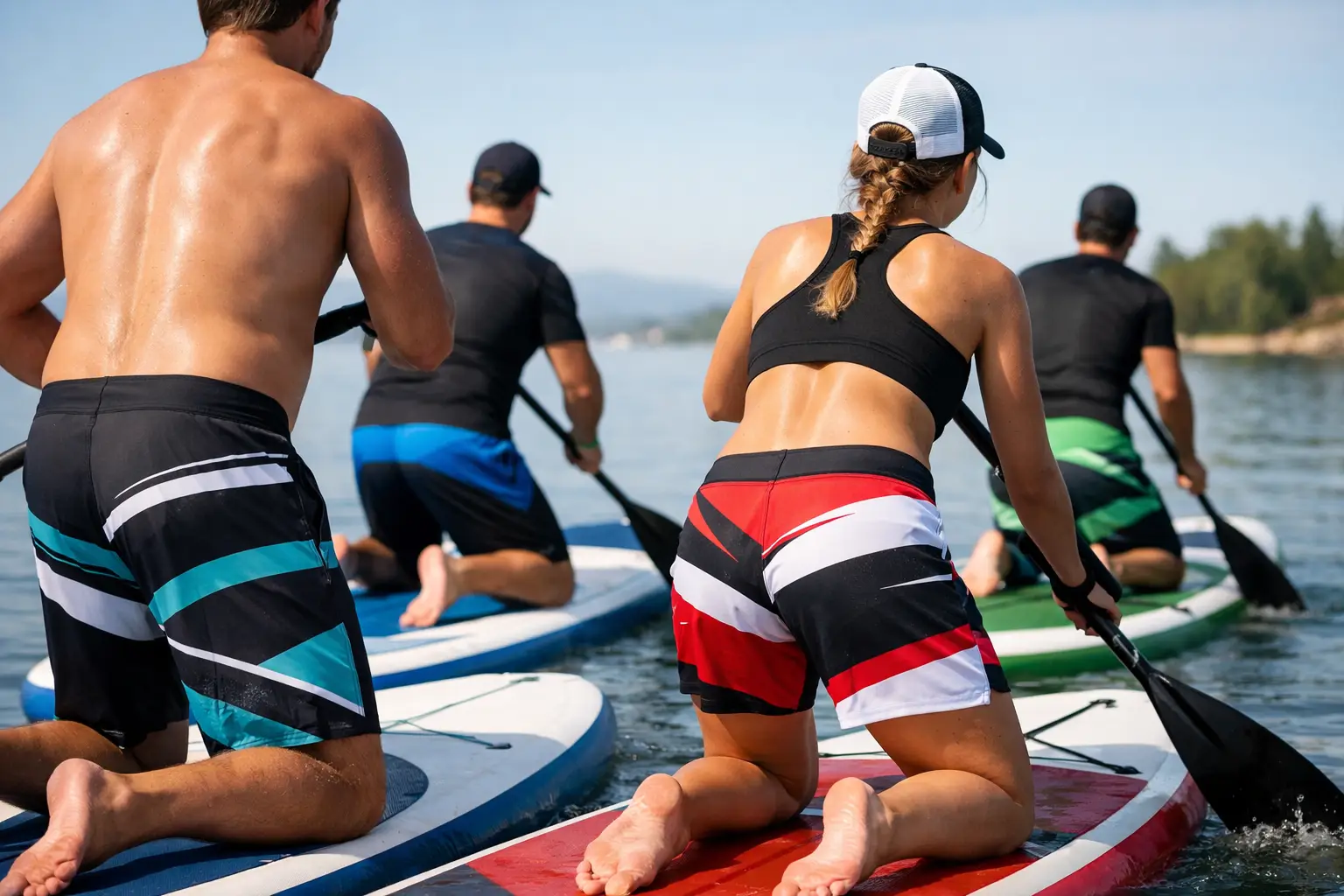
The difference between a kit that looks good in the team photo and kit that earns a place in every training bag is felt at the catch. Custom paddling board shorts need to stay comfortable through repeated rotation, wet seats, warm-up drills and long race days, while making every crew member look like part of the same club. That means giving equal weight to fit, fabric and team design before approving the artwork.
For dragon boat teams and paddling clubs, board shorts are more than a social item. They are practical training apparel, a visible part of team identity and, for many crews, the garment that carries sponsors, club colours and race-season memories. Getting them right is worth a little planning.
What Custom Paddling Board Shorts Need to Do
A paddler’s movement is repetitive, powerful and unforgiving of poor construction. Every stroke brings hip flexion, leg drive and torso rotation. Shorts that pull across the thighs, bunch at the waistband or retain too much water soon become a distraction.
A well-considered pair of board shorts should give the wearer freedom through the seat and thigh without looking baggy or catching on the paddle. The fabric should feel light when wet and dry quickly between sessions. A secure waistband matters too, particularly when crews are launching, carrying boats or moving between heats.
The best specification depends on how your team will use the shorts. A club looking for relaxed summer training kit may favour a more traditional board-short length and a casual fit. A race-focused crew may prefer a shorter, cleaner cut that reduces excess fabric around the knee. Neither option is automatically better. It comes down to the conditions you train in, what your members find comfortable and whether the garment is intended for paddling, social wear or both.
Fit comes before graphics
A striking design cannot compensate for an awkward fit. Before finalising colours or placing logos, agree the key fit decisions: inseam length, leg opening, waistband style and whether an internal lining is required. Teams should also consider how the shorts will sit over compression layers or padded shorts, especially for crews that train over distance.
Size ranges deserve the same attention. A squad order often includes different body shapes, juniors moving into adult sizes, coaches and supporters. A clear size chart and a sensible process for collecting orders will reduce late exchanges and avoid one member being left without race kit.
Choosing Fabric for Wet, High-Movement Sessions
For paddling board shorts, lightweight performance fabric is usually the right place to start. It should be durable enough for regular use, comfortable against damp skin and suitable for full-colour sublimation printing where required. Sublimation places the design into the fabric rather than laying a heavy print on top, helping club colours and detailed artwork remain part of the garment.
There is a balance to strike. Very light fabric can feel excellent in high heat but may not offer the structure some paddlers prefer. A heavier fabric may feel more substantial and hard-wearing, but it can hold more water and take longer to dry. The right choice depends on your local training environment, frequency of use and how much wear the shorts will receive off the water.
Pay attention to finishing details as well. Reinforced seams help where the garment works hardest, while a secure drawcord can make a major difference in choppy conditions. Pockets can be useful for travel and casual wear, but they are not always essential for racing. If you do include them, look for a design that lies flat and does not add unnecessary bulk.
Board shorts are not padded shorts
It is easy to expect one garment to cover every session, but board shorts and padded shorts serve different purposes. Board shorts offer a light outer layer with team visibility and versatile off-water appeal. Padded shorts are designed for crews who spend long periods seated and want more protection from friction and pressure.
Many established teams use both. Board shorts provide the core club look for training, regattas and social occasions, while padded shorts become a personal performance choice for endurance paddling or demanding camps. Planning a coordinated range gives members options without compromising the team’s visual identity.
Designing Shorts That Look Like Your Club
The strongest custom paddling board shorts do not try to display every part of a club’s history at once. They take the recognisable elements of the team identity – colours, logo, boat motif, sponsor placement or race nickname – and use them with purpose.
Start with the colours that people recognise from the water. A bold side panel, diagonal sweep or all-over pattern can work well, but leave enough calm space for logos to be read at a distance. Small details can be highly effective too: a crew name on the hem, a subtle paddle pattern or an inside-waistband message for the team.
Consider where graphics will sit when the wearer is moving. A logo placed at the outer thigh may be more visible in photographs than one wrapped around the back of the leg. Sponsor artwork needs clear contrast and sensible positioning. If a design uses a dark base with fine lines, check that those lines will remain visible rather than disappearing once viewed from a few metres away.
Artwork approval is the point to be exacting. Confirm spelling, sponsor requirements, colour references, logo quality and garment placement before production. A strike-off or pre-production confirmation gives committee members confidence that the approved design is the one being made. It also prevents the avoidable problem of discovering a misplaced logo only when the kit arrives ahead of a regatta.
Plan the Order Around the Race Calendar
Most kit delays are created before production begins. The club may still be deciding between two designs, waiting for sponsor approval or chasing size information from half the crew. Build those decisions into your schedule rather than treating them as last-minute admin.
With a finished and approved design, standard production lead times can be around 30 days. However, design development, revisions and late size changes all need additional allowance. If the shorts are intended for a major race, set an internal deadline that is earlier than the event date. This leaves room for distribution, individual checks and any unexpected delivery issue.
A practical order process has four clear stages:
- Agree the garment purpose, fit and required features with the team.
- Gather accurate logos, colour references, sponsor artwork and size details.
- Review and approve the final design and production confirmation carefully.
- Place the order early enough to protect your race-day deadline.
A designated kit lead makes this far easier. They do not need to make every decision alone, but one person should manage approvals, member sizing and the final order list. It keeps communication clear and protects the production timetable.
Make Team Kit Easier to Reorder
A good board-short design should work beyond one season. New members join, existing shorts wear out and successful race crews often want a fresh order before the next event. Keeping approved artwork, colour references and logo files organised makes repeat ordering much simpler.
It also helps to think in ranges rather than isolated garments. Board shorts can sit alongside matching rashies, jerseys, hoodies and social shirts, giving the club a consistent presence from winter training through to summer regattas. Not every member needs every item, but the shared colour palette should make the range feel connected.
At bluesupply.asia, the focus is on helping paddling teams move from a club idea to approved, production-ready kit with the design support and quality checks needed for group orders. That specialist approach matters when dozens of paddlers need the same colours, the same standard and a delivery date that supports the season.
The Details Your Crew Will Notice
Members will remember whether their shorts were comfortable on a hot training evening, whether the waistband stayed secure during starts and whether the colours still looked sharp at the end of the season. They will also notice if the design makes them proud to represent the club on the pontoon, in the boat and afterwards.
Start with how your team actually paddles, then build the design around that reality. A clear brief, a fit your crew trusts and an order placed with time to spare will give every paddler one less thing to think about when the drum starts.