

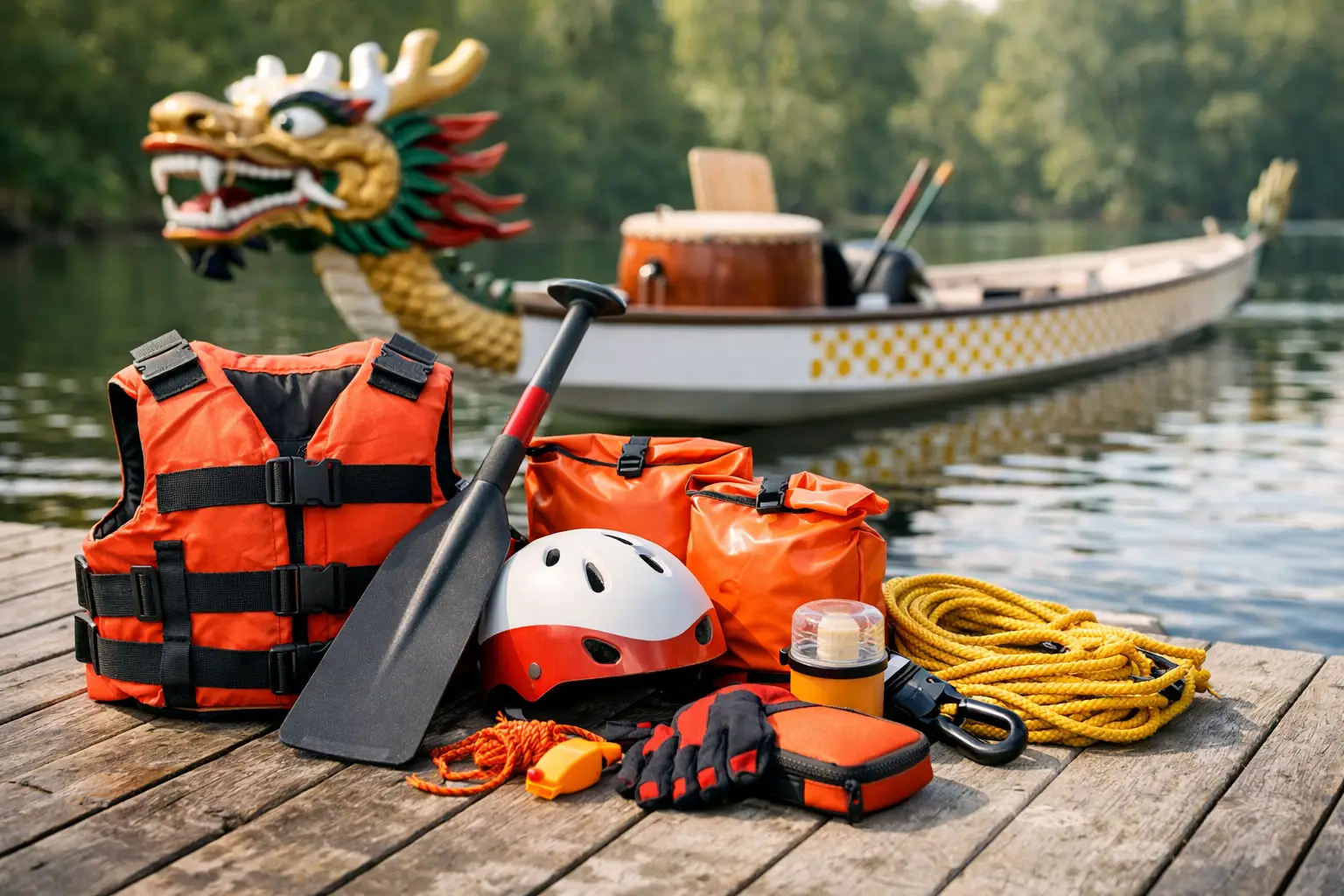
A dragon boat safety equipment kit should be ready before the crew carries the boat to the water, not assembled in a rush once conditions have changed. A missed buoyancy aid, a flat mobile phone or an inaccessible first-aid bag can turn a manageable incident into a difficult recovery. For captains and coaches, the aim is straightforward: give paddlers the right personal protection, keep essential response equipment close at hand and make responsibilities clear before each session.
The exact kit will vary by venue, water temperature, crew experience, event rules and whether you are paddling on sheltered water, an estuary or open water. Treat this as a practical base for a club checklist, then align it with your governing body guidance, venue requirements and risk assessment.
Start with a dragon boat safety equipment kit for every paddler
Personal equipment is the first layer of safety. It needs to fit, be maintained and be worn properly. There is little value in a buoyancy aid stored in a kit bag or adjusted so loosely that it rides up in the water.
A correctly fitted buoyancy aid is the central item. Choose one designed for paddlesport that allows full shoulder movement and does not restrict rotation through the stroke. Teams should inspect buckles, webbing, zips and buoyancy foam regularly, particularly on club kit that has seen several seasons of use. A name label helps prevent post-session mix-ups, but it is not a substitute for an individual fit check.
Footwear depends on the launch area and boat set-up. Closed-toe water shoes can protect feet on rough slipways, pontoons and riverbeds, while still draining quickly after a capsize. Bare feet may be permitted in some boats or events, but crews should understand the hazards at their home venue before making that choice.
Clothing is part of the safety picture as well. A technical rashie or lightweight jersey can protect against sun, wind and chafing without becoming heavy when wet. In colder British conditions, paddlers need layers suitable for immersion rather than simply warmth on land. That may mean a thermal base layer, an outer wind layer and a change of dry clothing waiting ashore. Cotton is comfortable at the clubhouse but a poor option for cold, wet training.
A whistle attached to a buoyancy aid is useful where crews may become separated from the boat or safety cover. It should be simple, audible and accessible with either hand. For early-morning sessions, reflective details and a compact approved light can also be appropriate, especially where other water users share the course.
Equipment that stays with the boat
The boat kit should be stored consistently, secured so it cannot wash away and checked by a named person. The steerer or coach must be able to reach key items quickly without emptying a dry bag across the deck.
A well-stocked first-aid kit belongs close to the launch point or in the support craft, rather than buried under team clothing. It should cover common training issues such as cuts, blisters, minor strains and cold exposure, while the club’s emergency plan should identify who is trained to use it. Check expiry dates, replace used supplies promptly and make sure everyone knows where it is.
Communication equipment is equally valuable. A fully charged mobile phone in a waterproof case may be enough for a short session on a familiar inland course, provided signal is reliable. For longer routes, tidal water or busy venues, a waterproof VHF radio carried by the appropriate trained person may be the better choice. Keep emergency contacts, the access point postcode or what3words reference, and details of the session plan available offline.
A throw line or rescue rope can be useful from a safety boat or bank position, but only if the crew has practised using it. Loose rope in a dragon boat creates entanglement risk, so it should not be casually coiled under seats. Similarly, a rescue knife is normally equipment for a trained safety operator, carried securely and used only when required – it is not standard personal kit for every paddler.
Depending on the boat, venue and operating procedure, the boat kit may also include a bailer or bilge pump, tow line, paddle float, spare paddle, thermal shelter and waterproof torch. A spare paddle is particularly sensible during long training sessions, when a broken or lost paddle can leave a crew member unable to contribute or manoeuvre safely.
Match the kit to the water and the session
There is no one-size-fits-all answer to dragon boat safety. A 60-minute coached session on a calm lake has different demands from a winter river paddle, a coastal training block or an overseas regatta. The kit should reflect the most credible problems, not just the equipment that happens to be in the store cupboard.
Cold water deserves special attention. Air temperature can be misleading: a bright March morning may still mean extremely cold water and a rapid loss of hand function after immersion. Require suitable layers, brief the crew on capsize behaviour and have warm, dry clothing, hot drinks and shelter ready ashore. A paddler who is shivering heavily, confused or unusually fatigued needs prompt attention, not encouragement to “walk it off”.
On tidal or coastal water, check tide, stream, weather, visibility and commercial traffic before launch. The session plan should state the intended route, turnaround point and decision point for abandoning the outing. Carry communication equipment that works for the area, and ensure the crew understands who has authority to stop or shorten the session. A race calendar does not override unsafe conditions.
At busy urban venues, visibility and collision avoidance may matter more than extra rescue hardware. Bright, consistent team colours, clear commands from the steerer and an agreed procedure for crossing channels help other users understand your boat’s movements. Training in matching custom kit also makes it easier for coaches and safety cover to identify their own paddlers quickly on crowded water.
Make capsize preparation part of training
A dragon boat safety equipment kit works best alongside rehearsed habits. Every crew should know how to react if the boat capsizes: stay with the boat unless instructed otherwise, account for paddlers, avoid climbing onto the hull if this risks injury or destabilises others, and follow the steerer or safety team’s directions.
Practise these procedures in controlled conditions, particularly with new paddlers. Explain where buoyancy aids are kept, how they should fit, what to do with paddles and how the group will be counted. Do not assume experienced athletes from other sports understand dragon boat recovery. A strong swimmer can still struggle in cold water, current, race clothing or a crowded capsize.
The person in the sweep position has a major operational role, but safety is not theirs alone. The drummer, coach and crew need an agreed command structure. Before launching, confirm who is leading on water, where safety cover is positioned and how an emergency stop will be communicated.
Use a simple pre-launch check
The best checklist is one the crew will actually use. Keep it short enough to run through every time, then complete more detailed inspections weekly or before major events. Before leaving the boathouse, confirm conditions are acceptable, the crew list is accurate, paddlers have appropriate buoyancy aids and clothing, communications are charged, and first-aid and rescue equipment are present.
At the water, check the boat for damage, loose fittings and water accumulation. Confirm the route, regrouping points, hazards and return time. New members should be paired with an experienced paddler where possible, and anyone feeling unwell or unsure should be encouraged to speak up before launch.
After the session, dry and air equipment before packing it away. Salt, mud and trapped moisture shorten the life of buoyancy aids, dry bags and electronics. Record faults immediately, even when they seem minor. A cracked buckle or damaged carry strap is much easier to replace on a quiet weekday than on the morning of a regatta.
Plan safety alongside team kit orders
When a club orders racewear, training layers and accessories, it is worth reviewing safety equipment at the same time. A new season often brings new paddlers, more training sessions and unfamiliar event venues. It is a natural point to count buoyancy aids, identify worn items and ensure the team’s kit list matches how and where it actually paddles.
Bluesupply.asia supports paddling teams with coordinated apparel, accessories and safety kit considerations, helping clubs prepare for the practical demands around training and race day. Keep the ordering process organised, but give safety equipment its own ownership, inspection schedule and budget line.
A crew looks most confident when everyone is focused on the start line. Put the right kit in place early, practise the plan often and let every paddler know that raising a safety concern is part of being a good teammate.