

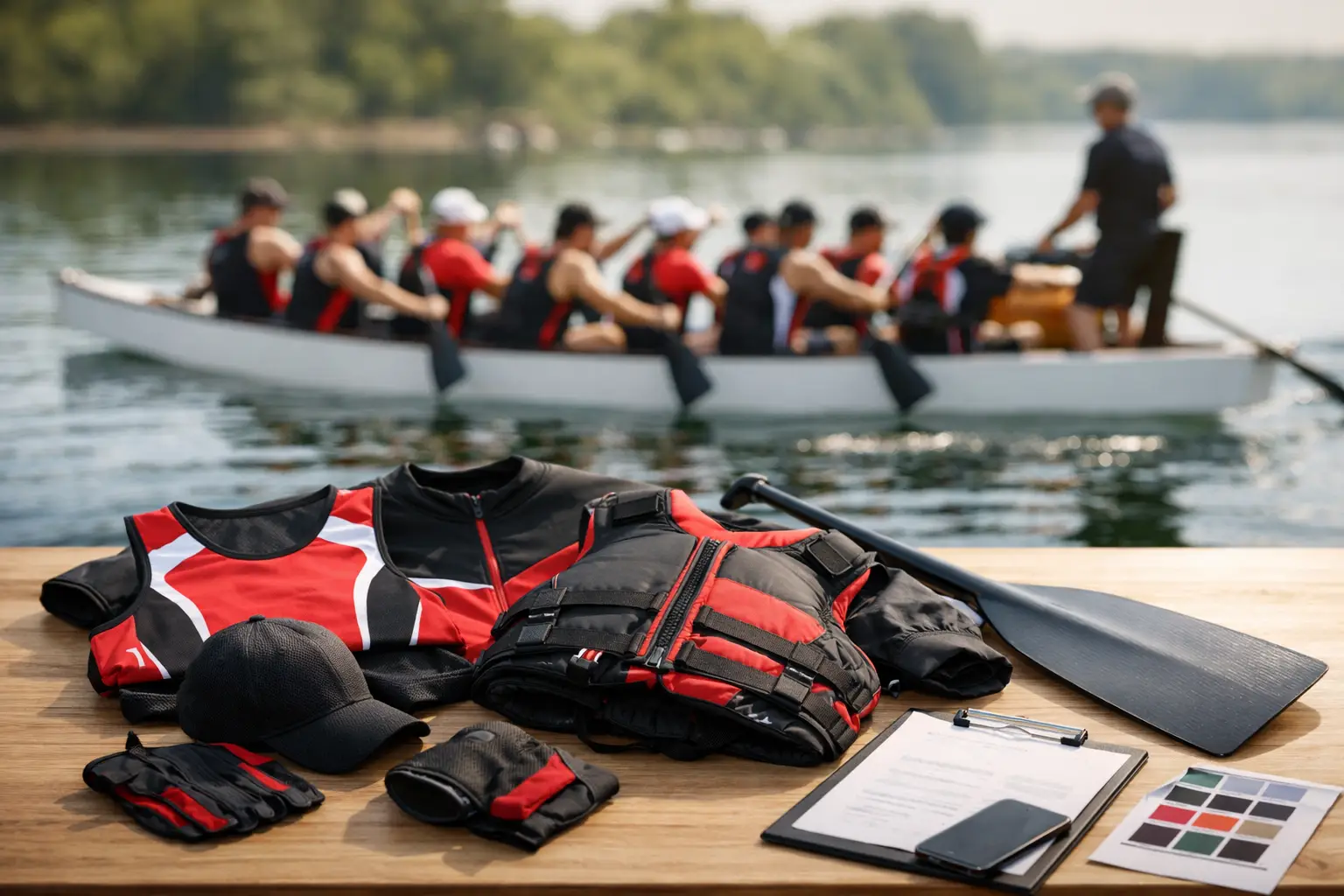
A race date is fixed, the crew list is growing and everyone wants to look like one team on the water. That is when a club kit quotation becomes more than a price request. It is the working plan for your design, garment choices, sizes, budget and delivery date – all the details that decide whether kit arrives ready for race day or becomes a last-minute committee problem.
For dragon boat and paddling clubs, the best quotation process starts before anyone begins collecting names in a group chat. A clear brief gives your supplier the information needed to price accurately, protect production quality and keep the order moving.
What a club kit quotation should cover
A useful quotation is specific enough to let your committee make a decision with confidence. It should show the garments requested, quantities, unit prices, customisation requirements, expected lead time and any delivery costs. If something is not confirmed yet, such as final sizes or a sponsor logo, make that clear rather than assuming it is included.
Custom paddling kit is not a single product. A race crew may need racerback rashies for summer regattas, long-sleeve tops for cooler sessions, board shorts, padded shorts, windbreakers and social shirts for the bank. Each item has a different cut, fabric requirement and print area. Asking for one total figure without separating those choices can produce a quote that looks simple but does not reflect what the team actually needs.
It also helps to distinguish between approved artwork and a design still in development. If your club already has a finished print file, colour references and logo permissions, production can move more quickly. If the concept is still a sketch on a phone, allow time for design development, revisions and final approval before the production clock begins.
Start with the purpose of the kit
Before selecting garments, decide where and how the team will wear them. Competition rashies need to be comfortable under a buoyancy aid, quick-drying and easy to move in through repeated paddle strokes. A social tee can prioritise a softer, more relaxed feel. A windbreaker has a different job again: keeping paddlers comfortable between races, on early starts and during wet launches.
This affects the quote because the most suitable garment is not always the lowest-priced one. A club ordering a first race top for new members may want a reliable all-round option. A representative crew preparing for a major overseas event may place more value on a technical fit, multiple garment formats and a tightly controlled design. Neither approach is wrong. The quotation should reflect the occasion, expected wear and available budget.
Information to prepare before requesting a quote
A supplier can often give an initial indication from a simple enquiry, but an accurate club kit quotation needs a few essentials. Share your expected quantity for each garment and state whether it is a firm number or an estimate. Small changes in volume can affect unit pricing, particularly where a minimum order quantity applies.
Include the garment formats you are considering. Saying “team tops” leaves room for confusion; saying “40 short-sleeve rashies, 20 racerbacks and 15 long-sleeve rashies” gives the quote a proper foundation. If the club is weighing up two options, ask for both. Comparing a short-sleeve-only order with a mixed range can be more useful than trying to settle every decision before getting costs.
Artwork is equally important. Send the current club logo in the best available format, identify any sponsor marks and explain where names, crew numbers or individual initials may be required. Logos copied from social media images are often too small or low-resolution for clean print or embroidery. Raising this early avoids a design that looks sharp on screen but loses detail on fabric.
Your delivery deadline matters too. Tell the supplier the event date, but also give the date by which the kit must be in members’ hands. A championship weekend may be the obvious deadline, yet the club may need a fitting evening, a team photo or an international departure several days earlier. Build in time for receiving, sorting and distributing the order.
For a smooth request, provide these details together:
- estimated quantities by garment type
- whether the design is finished or needs development
- logos, colours and personalisation requirements
- a size breakdown if available, or a date when it will be confirmed
- the event date and the required delivery date
Quantity, sizing and the reality of club orders
Size collection is where many well-planned apparel orders slow down. People change their mind, miss the deadline or select a size based on an everyday cotton T-shirt rather than a fitted performance garment. The practical answer is to use the relevant size chart, set one clear cut-off date and name one person to manage exceptions.
Do not guess at your entire size run because it feels quicker. A club can usually carry a small contingency in popular sizes, especially when recruiting, but holding too much spare stock ties up budget and may not suit future members if the design changes. The right balance depends on the club’s turnover, whether items will be sold individually after the main order, and how often the design is refreshed.
It is also worth confirming whether men’s, women’s or unisex fits are available for each style. The garment name alone does not guarantee the same fit across a range. For crews that include both racing and recreational paddlers, offering a choice of approved cuts can improve comfort and reduce exchange requests later.
Personalisation needs an early decision
Individual names and numbers create a strong sense of ownership, particularly for touring crews and race teams. They also add an approval step. Check spellings from a single submitted list, agree on capitalisation and decide whether nicknames are appropriate for the event and the club’s image.
Personalisation can make late additions harder to manage, because a top made for one paddler cannot simply be reassigned. If the crew list is not settled, consider ordering core club garments without names and reserving personalised pieces for confirmed participants. That is a trade-off between flexibility and the visual impact of fully individualised kit.
From artwork approval to delivery
A quotation should make the production sequence easy to understand. Once the garment selection, quantities and costs are agreed, the design needs to be checked and approved. For sublimation apparel, a strike-off or confirmation stage helps ensure the approved colours, logos and placement are carried into production as intended.
This step is worth treating seriously. Ask the people responsible for club branding to review the proof, not just the fastest respondent in the committee chat. Look at sponsor placement, spelling, logo proportions, garment colour, sleeve details and any required event marks. Approval is the point where a concept becomes a production instruction.
Finished designs can generally move through production more quickly than designs requiring development. As a guide, standard finished-design lead times may be around 30 days, but the final schedule depends on garment choice, order size, current production capacity, shipping destination and the speed of approvals. If you are ordering for a major regatta, avoid working backwards from the final possible day. A little contingency protects the team if a design revision, customs delay or late size issue appears.
A fast turnaround is valuable, but it should not mean skipping checks. The strongest suppliers combine a responsive quotation process with production oversight and quality control, so the team is not forced to choose between speed and a result they are proud to wear.
Questions worth asking before you approve
Price matters, but it is not the only comparison point. Ask whether the quote includes all expected print positions, individual names, embroidery, artwork support and delivery. Check how design changes are handled after the first proof, what happens if a supplied logo needs redrawing, and whether there are separate charges for small follow-up orders.
Ask about the approval process and what lead time starts from. A production estimate beginning after artwork sign-off is very different from one that assumes the design is already final. If your club needs several garment types, confirm whether they will arrive together and whether any item has a different minimum quantity or schedule.
Finally, check who owns each decision. One club contact should consolidate feedback, confirm quantities and give final artwork approval. A dozen well-meaning paddlers sending separate changes is not collaboration – it is how an order loses momentum.
Turn the quote into a team-ready order
The best club kit quotation gives your club a clear route from team identity to kit bags on the bank. It allows the captain to plan, the treasurer to budget, the designer to protect the visual standard and the paddlers to order with confidence.
When your next event is on the calendar, gather the essentials early and request a quote while there is room to make thoughtful choices. bluesupply.asia can help turn an approved club look into performance and off-water apparel that your crew will be proud to wear, from the first training session to the final race call.