

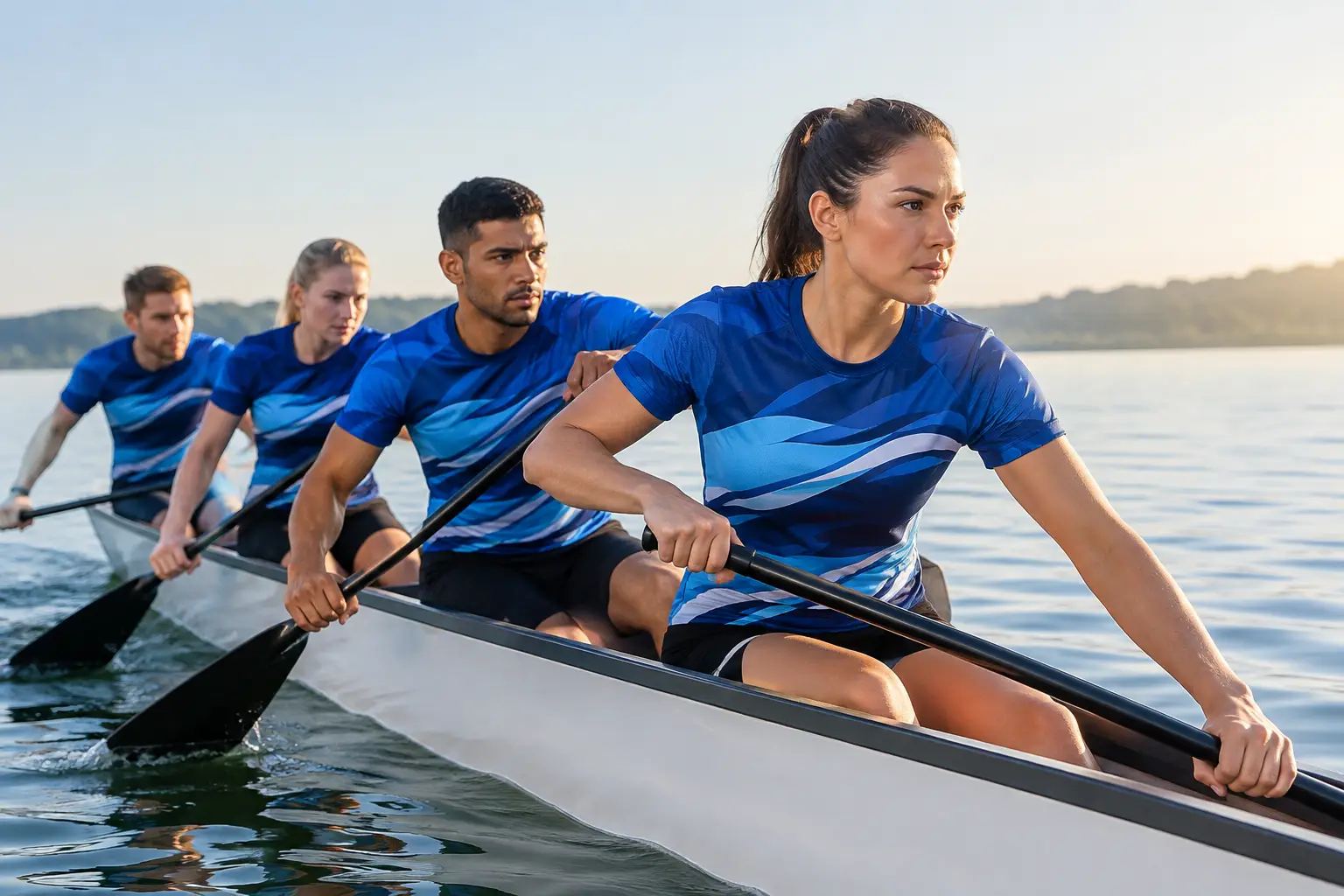
A boat can look composed from the bank while every paddler is dealing with heat, spray, movement and the pressure of holding timing. That is why sublimation print teamwear is more than a way to put a club logo on a shirt. Done properly, it gives a crew kit that performs through training, looks sharp on the start line and still feels like the team long after racing finishes.
For dragon boat teams and paddling clubs, the best result comes from treating apparel as part of race preparation. The design needs to be recognisable at a distance, the garment needs to suit the session, and the order needs to arrive in time for the event calendar. Those details are connected.
What makes sublimation right for paddling teams?
Sublimation uses heat to infuse dye directly into polyester fabric. Rather than sitting on top of the garment as a separate layer, the colour becomes part of the material. This matters when a rashie is repeatedly exposed to sun, sweat, river water, sea spray and wash cycles.
The finish stays light, breathable and flexible across the full print area. A large back graphic, sleeve pattern or coloured side panel does not add the weight or stiffness associated with some traditional printed finishes. For crews who train hard in warm conditions, or layer up for a colder British morning, that freedom of movement is a real advantage.
It also gives teams much more design freedom. Names, numbers, sponsor marks, club colours and intricate artwork can be worked into one considered garment without turning it into a patchwork of separate applications. Gradients and fine linework are possible too, although the strongest race-day designs are usually those with clear colour contrast and a simple visual hierarchy.
There is a trade-off. Sublimation is designed for polyester-based performance garments, not every fibre or garment construction. It is also a made-to-order process, so an organised approval schedule matters far more than it would for buying plain stock shirts off the shelf.
Start with the conditions, not just the artwork
A crew’s apparel plan should reflect where and how it paddles. A humid summer regatta, winter river training and an overseas festival can call for different pieces, even when the team identity stays consistent.
A short-sleeve or racerback rashie is a natural choice for warm-weather training and racing, particularly when the crew wants light coverage without restricting the catch. Long-sleeve rashies add sun protection and can suit cooler sessions. Jerseys and social shirts carry the club look beyond the boat, while windbreakers make sense for marshals, supporters and paddlers waiting between heats.
Think about the full kit rather than making every requirement fit one garment. Board shorts, padded shorts and leggings can continue the club palette below the waist, while hoodies provide an off-water layer for travel, briefing and post-race photos. This approach also gives members options without weakening the team’s visual identity.
Fit deserves the same attention as colour. A race top should not pull across the shoulders during rotation, ride up under a buoyancy aid or feel loose enough to flap in the wind. Ask members to use the relevant size chart and measure rather than guess from another brand. A squad with a broad mix of body shapes will benefit from garment formats that allow people to choose what feels right while retaining the approved design.
Building a design that works from the pontoon to the podium
The most successful teamwear designs are recognisable before anyone can read the small details. Begin with the club’s key colours, logo and name, then decide what should be seen first from the side of the boat and from behind. In dragon boat racing, the back of the top is often where the strongest team identifier belongs.
Avoid asking every part of the garment to compete for attention. A bold shoulder line, distinctive panel, paddle-inspired pattern or clean central logo can create far more impact than a crowded arrangement of graphics. If sponsors are included, give their marks appropriate space and make sure their colours remain legible against the base design.
Names and race numbers need a clear decision at the outset. Personalisation gives individual paddlers a sense of ownership and can help team management on busy event days, but it adds information that must be checked carefully before production. Confirm spelling, capitalisation and number allocation in one final team list. Last-minute changes are where avoidable delays and mistakes tend to begin.
Colour on screen is a starting point, not a guarantee. Fabric, print process and lighting can all affect how a shade appears. A professional artwork approval and strike-off process gives the club a chance to confirm the direction before the full order proceeds. This is especially valuable when a team has established colours that members, alumni and supporters immediately recognise.
Sublimation print teamwear needs an ordering plan
The best kit orders are managed like a small team project. A captain, kit officer or committee lead should collect requirements early, set a cut-off date for members and nominate one person to approve the final artwork and order list. Too many separate approvals can slow a decision at exactly the point when production needs a clear instruction.
A practical ordering sequence looks like this:
- Set the event deadline and work backwards, allowing time for design development, revisions, size collection and delivery.
- Confirm the garment range, quantities and any personalisation before finalising artwork.
- Check the finished design, colours, logos and spellings carefully, then approve the strike-off where required.
- Keep a final record of sizes and names so future top-up orders remain consistent.
For a finished, approved design, a lead time of around 30 days provides a useful benchmark. New artwork development can take longer because it needs proper discussion, revision and sign-off. That time is not wasted administration. It is how a team protects the result before fabric is printed and panels are cut.
If your club has a major regatta, festival or overseas trip on the calendar, do not leave apparel to the final few weeks. Delivery pressure can turn straightforward choices into compromises: fewer sizes, reduced personalisation or a rushed design decision. Ordering early gives the team room to get the right kit, rather than simply any kit.
Keep the identity consistent across the club
A paddling club has more than one audience. There are race crews, recreational paddlers, coaches, volunteers, supporters and new members who want to feel part of the group before they have earned a seat in the competition boat. A coordinated apparel range can bring them together without forcing everyone into identical clothing.
Set a few non-negotiables: the core colours, logo treatment, font style and placement of the club name. Then adapt those elements across race rashies, hoodies, windbreakers and social shirts. The result feels intentional, whether the team is loading boats at dawn, racing in Hong Kong or meeting for food after a UK regatta.
This is also where accessories and embroidery have a role. An embroidered cap, bag or off-water layer can complement sublimated racewear where a textured, durable finish is more appropriate. The key is using each decoration method for the job it does best, rather than applying one solution to every item.
Care that keeps race kit looking like race kit
Sublimated garments are built for regular use, but simple care helps preserve fit and appearance. Rinse kit after saltwater sessions, wash it inside out with similar colours and avoid high heat where possible. Do not leave damp racewear crumpled in a kit bag after a long journey home, particularly if it has been exposed to salt or muddy water.
It is sensible to hold a small number of spare garments for new recruits, late replacements and travelling reserves. Keep the approved artwork and production details on file too. When the next order comes around, that consistency makes it easier to add pieces without the club identity drifting over time.
For teams preparing their next season, the right apparel begins with a clear brief, accurate member information and enough time to make good choices. bluesupply.asia helps paddling clubs turn that preparation into kit that is ready for the boat, the finish line and the team photo that follows.