

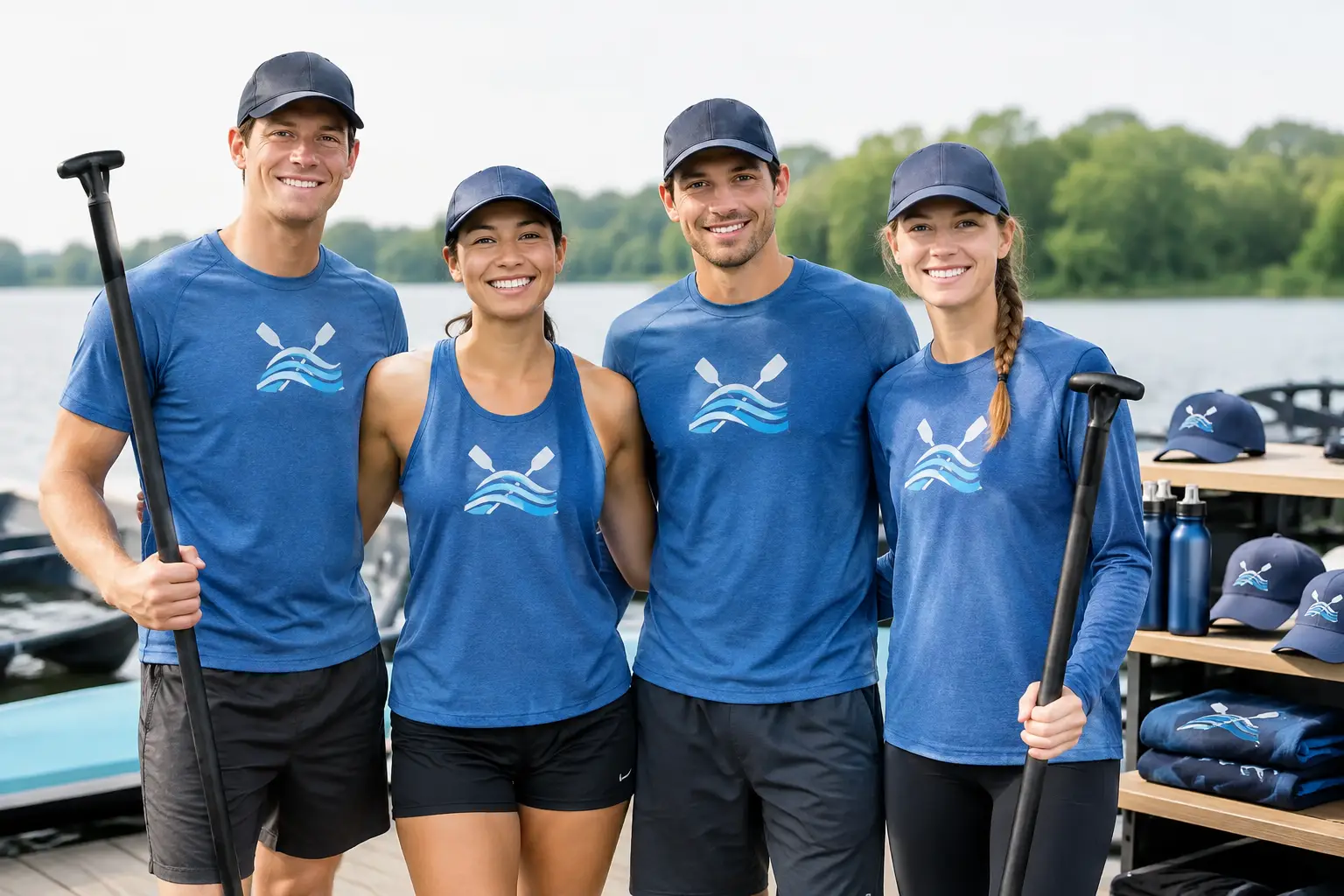
The test of paddling club merchandise is not how it looks on a mock-up. It is whether a crew reaches for it at 6am before a winter session, wears it proudly at a regatta, and keeps it in the kit bag long after race day. For dragon boat teams and paddling clubs, the best merchandise is useful team kit with a clear identity behind it – not a box of giveaways nobody needs.
A well-planned range gives new members a way to belong, helps returning paddlers replace hard-working essentials, and puts the club’s colours in front of competitors, supporters and prospective recruits. Getting there takes more than adding a logo to a shirt. It means choosing garments for the way your team actually trains, races and socialises.
Start with the crew’s real paddling calendar
Before selecting products, look at the year ahead. A club with spring regattas, weekly summer sessions and a busy autumn race programme needs different priorities from a crew that trains through the cold and travels internationally. Merchandise should follow those conditions.
Technical rashies are often the heart of a race kit. They give the crew a unified look, protect from sun and spray, and provide a recognisable competition layer. Racerback, short-sleeve and long-sleeve options let teams account for individual preference without losing a consistent visual identity. Long sleeves may be the obvious choice for exposed summer events, while short sleeves can suit athletes who prefer less coverage during hard efforts.
Training needs are broader. Hoodies and windbreakers earn their value at the water’s edge, during warm-ups and while loading boats. Board shorts, padded shorts and leggings can support regular paddlers who want practical kit beyond their race top. Social shirts then carry the club identity into fundraisers, travel days and post-race food. The point is not to offer every possible garment. It is to build a small range with a job to do.
Separate race kit from club identity pieces
Race apparel usually needs stricter control. Colours, sponsor placement, athlete names and event regulations can all matter, particularly when multiple crews compete under one club banner. Keep approved race designs clear and consistent so there is no uncertainty when a team is preparing for a major event.
Club identity pieces can be more flexible. A hoodie might use the same key colours and logo but allow a more relaxed design. An embroidered cap, social shirt or team bag can work across squads, supporters and alumni. This separation helps the committee protect a professional race-day image while giving members more choice off the water.
Build paddling club merchandise around a clear design system
The strongest kit ranges look related even when the garments are different. That comes from a simple design system: a defined club colour palette, a primary logo, supporting graphic elements and rules for names, sponsors and partner logos.
A dragon boat design does not need to be crowded to feel energetic. Clean lines, considered contrast and readable text often travel better across a boat, a start line and a photograph than a design packed with small details. Remember that a sleeve, hood or side panel changes how artwork is seen. What works on a flat screen may need adjustment once it is placed around a body in motion.
This is where design support and a proper approval process matter. Ask to see the garment layout, confirm the placement of every logo, and check colours against existing club assets where consistency is important. A production strike-off provides another useful safeguard before the full order moves forward. It is far easier to correct a detail at approval stage than explain a mismatch when the lorry has already delivered the team kit.
Make sponsors visible without making kit feel temporary
Sponsors are vital to many clubs, but sponsor logos need a planned place within the design. A large chest mark may work for a principal partner, while smaller supporters can sit on sleeves, backs or lower panels. The balance depends on your agreements and the garment, but legibility should always come first.
Think ahead, too. If sponsors change each season, reserve areas of the design that can be updated without rebuilding the whole visual concept. This reduces design time and helps your team retain a recognisable identity from one year to the next.
Ordering for a squad without creating a committee headache
The most attractive range can still cause trouble if ordering is unclear. Paddling clubs are made up of different body shapes, training habits and budgets. A useful ordering plan gives members enough choice while keeping administration manageable.
Start with a core compulsory or strongly recommended item, such as an approved race rashie. Then offer optional layers and off-water pieces. Publish size charts early, set a firm cut-off date and make it clear whether names or numbers are available. If a garment is personalised, remind members to check spelling before the order is submitted.
Avoid treating sizing as a minor detail. Technical garments can fit differently from ordinary cotton shirts, and paddlers will have preferences around close-fitting race layers versus roomier outerwear. Encourage people to use measurements rather than assume their usual high-street size. For a large team order, arranging sample sizes or a fitting session can prevent costly exchanges and last-minute frustration.
Lead time needs the same attention. Finished, approved designs can typically move more quickly than a new concept requiring design development and multiple revisions. For major regattas, work backwards from the event date and leave room for member ordering, artwork approval, production and delivery. Thirty days may sound comfortable until a committee has spent two weeks collecting sizes.
Choose quality where paddlers notice it
Paddlers are hard on kit. It is exposed to UV, repeated washing, wet benches, boat straps and the general abuse of travel weekends. Cheap apparel can look like a saving until prints fade, seams fail or the fit discourages members from wearing it.
Sublimation printing is particularly useful for detailed team designs because colour and graphics are integrated into the fabric rather than sitting heavily on top. It allows clubs to carry stripes, gradients, names and sponsor graphics across a garment while keeping the result suitable for active use. The garment choice still matters, though. A social cotton shirt and a race rashie serve different purposes and should be judged by different standards.
For embroidery, choose items where texture and durability add value, such as caps, outer layers and selected accessories. Fine lines and tiny text may not reproduce well in thread, so simplify the artwork where needed. A professional supplier should advise on that before production rather than simply embroidering an unsuitable file.
Do not overlook the kit that supports the day
Apparel creates the visual impact, but accessories and safety items can make club merchandise more useful. Dry bags, caps, towels, water bottles or team bags may suit your members, depending on the club’s existing kit and event habits. Safety kits deserve a separate conversation: their contents should be selected for the activity, crew size and club procedures, rather than treated as a branded afterthought.
There is a trade-off here. A broad catalogue can make a club shop feel exciting, but too many low-demand items can split order volumes and leave members unsure what to buy. Begin with the products your team will use most often. Add seasonal or event-specific items when there is a genuine reason, such as an anniversary race, overseas trip or championship campaign.
Give every member a route into the club
Merchandise works best when it includes more than the fastest crew. New paddlers may want a simple club shirt before committing to full race kit. Coaches and steers need practical layers for long days on the bank. Supporters may prefer a hoodie or cap that lets them represent the club without wearing athlete apparel.
That wider approach builds visibility and makes the club feel more connected. It also creates a sensible purchasing pathway: an introductory identity piece, core training kit, then approved competition apparel when a member is ready to race. For committee members, this can be easier to manage than a single large order that assumes every person wants exactly the same thing.
A specialist paddling supplier such as bluesupply.asia can help turn that pathway into a coordinated range, with design development, garment options and production checks handled around the needs of the team rather than generic promotional clothing.
The right merchandise gives a crew one less thing to worry about before a start. Set the design early, collect sizes carefully and choose kit your paddlers will be pleased to wear when the forecast turns, the boat is rigged and the next race is called.