

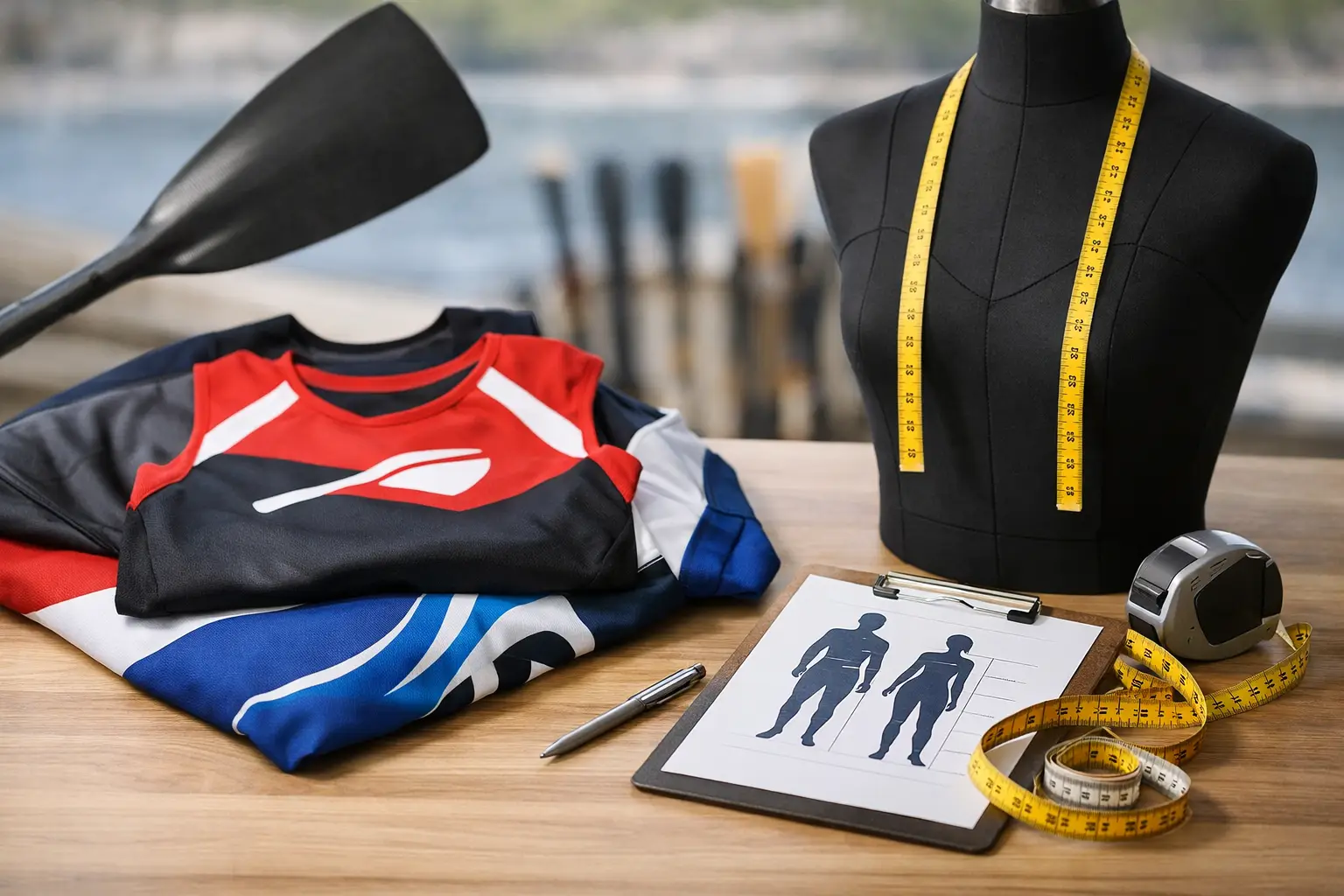
A race crew can agree on a paddle call in seconds, yet collecting 25 clothing sizes can somehow take three weeks. The difference is usually not commitment. It is a team kit size chart guide that is unclear, shared too late or treated as a rough suggestion. For custom paddling kit, getting sizing right protects comfort, team budget and race-day confidence.
Custom garments are made for the squad, not pulled from a shelf after an order is placed. That makes the size-collection stage worth doing properly. A well-organised process gives every paddler time to check the relevant garment chart, ask a question before production and confirm their choice once, rather than changing it when the kit is already in manufacture.
Why kit sizing matters on the water
Paddling apparel needs to work through rotation, reach and repeated movement. A rashie that feels fine while standing still may pull across the shoulders at the catch. Board shorts that are too loose can shift on the seat, while leggings with an unsuitable waist fit can become distracting over a long training session. The right size is about more than a tidy team photo.
There is also the club-order reality. Teams commonly order a mix of racerback and sleeve rashies, hoodies, shorts, leggings, windbreakers and social shirts. One person may be a medium in a relaxed hoodie and a large in a close-fitting race rashie. Assuming one size fits across every product creates avoidable exchanges and disappointed paddlers.
Most importantly, a confirmed size list allows production to begin without uncertainty. If your crew is ordering for a regatta, festival or new season, build in time for sizing before your approved artwork goes to production. Finished designs typically move through production in around 30 days, so late size changes can put unnecessary pressure on the schedule.
Team kit size chart guide: start with the garment
Always use the size chart supplied for the exact item being ordered. Do not compare a current club cotton tee with a technical rashie, or use a chart from another supplier as a substitute. Garment cuts, fabrics and intended fits vary, particularly across custom apparel.
A race rashie is often designed to sit closer to the body than a social shirt. This reduces excess fabric and supports unrestricted paddling movement, but it means paddlers who prefer a relaxed fit may choose to size up. Hoodies and windbreakers may be worn over base layers, so allow for what will realistically sit underneath. Padded shorts need particular attention because seat padding, leg opening and waistband preference are personal.
Before sharing the chart, tell the team what each garment is intended to do. A short note can prevent a lot of confusion: race rashies are performance-fitting; hoodies are generally selected for layering and off-water comfort; social shirts can be chosen with a more relaxed preference. Clear guidance is more useful than simply posting an image of a chart in a group chat.
Measure the body, not a hopeful estimate
A flexible tape measure gives the most reliable starting point. Ask paddlers to measure in light clothing, keep the tape level and avoid pulling it tight. For tops, chest is normally the key measurement. For shorts and leggings, waist and hip measurements are usually more relevant. Where a chart gives a body measurement, use the paddler’s body measurement. Where it gives garment dimensions, compare those dimensions with a favourite garment laid flat.
The distinction matters. A 100 cm chest measurement does not mean a 100 cm finished garment will feel comfortable during a race. Technical clothing needs appropriate ease, and each chart should explain whether its measurements refer to the body or the garment itself.
If someone falls between sizes, the best choice depends on the product and their preferred fit. For a close-fitting rashie, choosing the larger size may be more comfortable across the shoulders and chest. For a loose windbreaker, the smaller size may be right unless it will be worn over a hoodie. Captains should encourage paddlers to decide based on the product, not pride in a label.
Build a size collection process that people will complete
The simplest approach is to nominate one kit coordinator and set one firm deadline. The coordinator should send the approved garment list, the correct size chart for each item and a single order form that cannot be misunderstood. Avoid collecting sizes in scattered direct messages, comment threads and verbal conversations after training.
Your form should record the paddler’s name, garment style, cut where applicable, chosen size and quantity. If the same design is available in racerback, short-sleeve and long-sleeve formats, list them as separate products. This avoids a classic mistake: a paddler writes “L rashie” when the order needs to specify which rashie and how many.
For larger squads, it helps to include a status column for “submitted”, “checked” and “confirmed”. A short reminder before the deadline is useful, but do not chase indefinite changes. Once the full order is checked and approved, every alteration can affect administration, production planning and delivery timing.
Here are the checks worth completing before the final list is sent:
- Confirm every paddler has selected a size for each garment they requested.
- Check that product names, cuts, quantities and sizes are all stated clearly.
- Flag anyone who has guessed a size or used an unrelated garment as reference.
- Ask new members and junior-to-adult movers to measure rather than rely on a previous order.
- Recheck totals by product, size and design before approving the production order.
This is not paperwork for its own sake. It is how a team protects the accuracy of a made-to-order run.
Run a fitting session when the order is significant
For a new club design, a large order or a major race programme, a short fitting session can be the best investment your committee makes. Bring sample garments where available, print or display the current charts, and give paddlers ten minutes before or after training to compare their measurements and fit preference.
A fitting session is especially helpful when the crew includes people who have never worn technical paddling apparel, or when the team is introducing a new product such as padded shorts or leggings. It also gives captains the opportunity to explain how kit will be used: an early-morning training layer has different fit requirements from a race rashie worn in warm weather.
Not every club needs a full fitting event. For a repeat order of a familiar garment, a clear digital chart and confirmed previous sizes may be enough. The trade-off is that members should still check the current chart if the garment model, cut or supplier specification has changed.
Common size chart mistakes to avoid
The most common error is treating unisex, women’s and performance cuts as interchangeable. A label such as medium does not describe the same shape across all cuts. Where separate charts are supplied, each paddler must use the chart for their selected garment.
Another issue is ordering for a future body rather than the person who will be racing. Whether someone is building strength, returning from injury or planning to lose weight, kit should fit comfortably for the event and training period it is ordered for. Technical clothing that is too tight can restrict movement; clothing that is too loose can rub, flap and feel cumbersome.
Teams also sometimes leave sizing until after design approval. Artwork approval and size collection can run alongside each other, but neither should be allowed to hold up the other without a clear timeline. Agree your internal deadline early, particularly ahead of busy regatta periods.
Finally, do not overlook off-water items. Hoodies, social shirts and windbreakers are often worn more casually, so people may have stronger personal fit preferences. Give them the relevant chart and let them choose accordingly rather than applying their race-rashie size automatically.
Make the final approval easy to trust
Before placing the order, send each paddler a final line-item confirmation. It should show exactly what they will receive, including style, cut, size and quantity. This gives individuals a final chance to spot an error while keeping the coordinator in control of one definitive order sheet.
At bluesupply.asia, the aim is to make custom teamwear feel organised from first design conversation to delivery. Accurate size information sits alongside approved artwork and strike-off confirmation as part of a production process your crew can rely on.
A good kit order lets paddlers concentrate on timing, technique and the next start line. Set a clear size deadline, use the chart for each specific garment and ask the question before the order is confirmed. Your team will feel the difference when every member pulls on kit that is ready to move with them.